
Innovation & Technology
Science that goes further for your recovery
Why it matters
Technology that amplifies human care
Innovation at Oceánica is not about replacing the therapeutic relationship — it is about giving our clinical team better tools to understand each patient at a biological level and intervene with precision that standard protocols simply cannot offer.
Most treatment centers rely on a one-size-fits-all medication approach. At Oceánica, genetic testing guides pharmacotherapy. Neurological tools complement psychotherapy. Physical recovery accelerates through evidence-supported technology. The result is care that is genuinely tailored — not just in what is discussed in sessions, but in how the body and brain are treated.
Technology 01
Naltrexone Pellet
A sub-dermal implant that delivers a steady, controlled release of Naltrexone — removing the daily compliance barrier that undermines oral medication adherence.
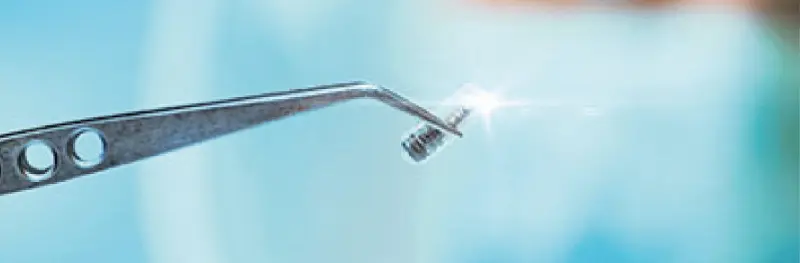
| Method | Sub-dermal implant, administered by a physician under local anesthesia |
| Duration | Provides sustained medication levels over several weeks to months |
| Phase | Typically initiated during or after detoxification, continued through residential treatment |
Conditions treated
- Alcohol Use Disorder
- Opioid Dependence
- Drug Addiction
Technology 02
Electromagnetic Therapy (PEMF)

| Method | Non-invasive; electromagnetic pulses applied externally via specialized equipment |
| Sessions | Multiple sessions integrated into the weekly residential treatment schedule |
| Phase | Residential treatment; complement to psychiatric and psychotherapeutic care |
Conditions treated
- Depression
- Anxiety
- Dysthymia
- Dual Diagnosis
Technology 03
Hyperbaric Oxygen Therapy
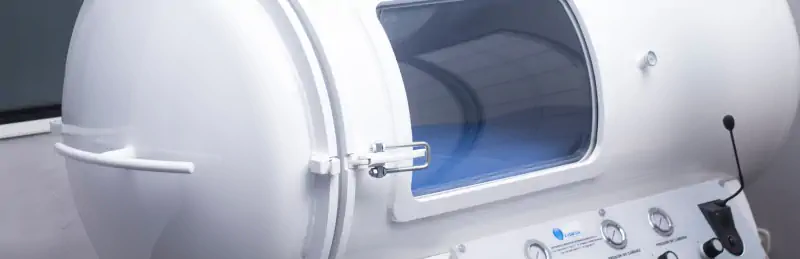
| Method | Patient rests inside a pressurized hyperbaric chamber breathing 100% oxygen |
| Sessions | Multiple scheduled sessions during the residential treatment phase |
| Phase | Post-detox and throughout residential treatment as a recovery complement |
Conditions treated
- Substance Use Disorders
- Physical Recovery
- Cognitive Restoration
Technology 04
Pharmacogenomics

| Method | Simple genetic sample (saliva or blood) analyzed by a clinical laboratory |
| Timing | Conducted at or shortly after admission to inform the treatment plan from the start |
| Phase | Informs psychiatry throughout detox and residential treatment |
Conditions treated
- Depression
- Anxiety
- Dual Diagnosis
- Any condition requiring psychiatric medication
Technology 05
Nutrigenomics

| Method | Genetic analysis combined with clinical nutritional assessment |
| Output | Individualized meal plan and nutritional supplementation protocol |
| Phase | Applied throughout residential treatment and extended into aftercare planning |
Conditions treated
- All treatment programs
- Eating Disorders
- Physical Restoration
- Metabolic Recovery
The Difference
What most centers offer.
What Oceánica offers.
| Technology / Approach | Standard U.S. Center | Oceánica |
|---|---|---|
| Naltrexone Pellet (sub-dermal implant) | ✗ | ✓ |
| Electromagnetic Therapy (PEMF) | ✗ | ✓ |
| Hyperbaric Oxygen Therapy | ✗ | ✓ |
| Pharmacogenomics (gene-guided medication) | ✗ | ✓ |
| Nutrigenomics (DNA-based nutrition plans) | ✗ | ✓ |
| 24h Medical & Psychiatric Supervision | Varies | ✓ |
| Dual-diagnosis capable (addiction + mental health) | Varies | ✓ |
| Lifelong aftercare & alumni support | ✗ | ✓ |
| Cost vs. equivalent U.S. program | $30,000 – $80,000+/mo | Fraction of U.S. cost |
* The innovative technologies listed above are available as personalized add-ons to any residential program and carry an additional cost. Your admission advisor will build a detailed, transparent cost estimate during your consultation — with no obligation.
The hardest step is
the first one.
We'll take it with you.
Confidential, no-pressure conversations with our admissions team are available 24/7. We’re here whenever you’re ready.

30 years helping individuals and families across North America find lasting recovery — from our private oceanfront campus in Mazatlán, Mexico
Programs
- Addiction Treatment
- Mental Health
- Eating Disorders
- Family Programs
- Intervention Services
About
- Our Story
- Clinical Team
- Facilities
- Accreditations
- Blog
Contact
(213) 527-3377
+52 669 160 1494
Av. Ernesto Coppel Campaña 4924
Mazatlán, Sinaloa, México
© 2026 Oceánica · Privacy Notice