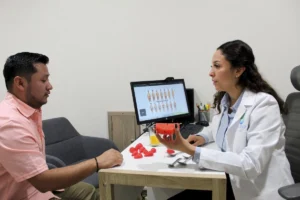

Of all the substances people become dependent on, alcohol is among the most dangerous to withdraw from. While society often treats drinking casually, the medical reality of severe alcohol dependence is sobering: stopping suddenly, without supervision, can cause seizures and a life-threatening condition called delirium tremens. This is why alcohol withdrawal should always be managed medically.
At Oceánica, alcohol withdrawal is treated with the seriousness it deserves — using established clinical assessment tools, medication-assisted protocols, and round-the-clock physician supervision. This article explains why alcohol withdrawal is dangerous, how it is assessed and managed, and what the process actually looks like.
—
WHY ALCOHOL WITHDRAWAL IS DANGEROUS
Chronic heavy drinking changes the brain. Alcohol is a central nervous system depressant, and over time the brain compensates by ramping up excitatory activity to maintain balance. When alcohol is suddenly removed, that excitatory activity is left unopposed — the nervous system goes into overdrive.
This produces the cascade of alcohol withdrawal symptoms, which can range from uncomfortable to deadly:
- Mild: anxiety, tremors, sweating, nausea, headache, insomnia
- Moderate: elevated heart rate and blood pressure, confusion, heightened agitation
- Severe: seizures and delirium tremens (DTs)
Delirium tremens is the most dangerous manifestation. It involves severe confusion, hallucinations, profound autonomic instability, and carries a meaningful risk of death when untreated. Withdrawal seizures are also a genuine medical emergency.
The crucial point: the people at highest risk are often those who have been drinking heavily for the longest — and who may believe they can “tough it out” at home. They cannot, and attempting to do so can be fatal.
—
CIWA-Ar ASSESSMENT
To manage alcohol withdrawal safely, clinicians need an objective way to measure its severity. The standard tool is the CIWA-Ar — the Clinical Institute Withdrawal Assessment for Alcohol, revised.
The CIWA-Ar is a validated scale that scores the severity of withdrawal across multiple domains, including:
- Nausea and vomiting
- Tremor
- Sweating
- Anxiety
- Agitation
- Tactile, auditory, and visual disturbances
- Headache
- Orientation and clouding of consciousness
Each domain is scored, and the total guides clinical decisions. A higher CIWA-Ar score indicates more severe withdrawal and signals the need for more intensive medication and monitoring. By reassessing regularly, the clinical team can adjust treatment in real time — giving medication when symptoms escalate and easing off as the patient stabilizes.
This symptom-triggered approach, guided by objective scoring rather than guesswork, is the modern standard of care for alcohol withdrawal. It is one of the markers of a facility that manages detox properly.
—
MEDICATIONS USED IN DETOX
Medication-assisted treatment is central to safe alcohol withdrawal. The goal is to calm the overactive nervous system, prevent seizures and DTs, and keep the patient as comfortable as possible.
The cornerstone of alcohol withdrawal management is the benzodiazepine class of medications, which are used under careful medical supervision to:
- Reduce the risk of withdrawal seizures
- Prevent progression to delirium tremens
- Ease anxiety, agitation, and tremor
Dosing is typically guided by the CIWA-Ar score — a symptom-triggered protocol — so the patient receives what they need based on their actual condition. In addition, the clinical team may address related needs such as:
- Hydration and electrolyte correction
- Thiamine (vitamin B1) and other nutritional support, important because chronic drinking depletes key nutrients
- Management of co-occurring symptoms such as nausea or insomnia
All medication decisions at Oceánica are made by qualified medical staff based on individual assessment. (Specific protocols are determined clinically; this article is not medical advice.)
—
DTs & SEIZURE PREVENTION
The entire structure of medical alcohol withdrawal is built around preventing the two most dangerous complications: withdrawal seizures and delirium tremens.
Prevention rests on several pillars:
Early, accurate assessment. Identifying who is at high risk — based on drinking history, prior withdrawal episodes, and CIWA-Ar scoring — allows the team to intervene before complications develop.
Adequate, timely medication. Proper benzodiazepine management, guided by symptom severity, dramatically reduces the risk of seizures and DTs.
Continuous monitoring. 24/7 observation means that escalating symptoms are caught early. Vital signs, mental status, and CIWA-Ar scores are tracked so the team can respond immediately to any sign of deterioration.
A medically equipped setting. On-site medical staff and protocols for emergencies mean that if a complication does arise, it can be managed promptly.
This is precisely why home detox or treatment at a non-medical facility is so dangerous for alcohol-dependent patients. The margin between manageable withdrawal and a medical emergency can be narrow, and only a properly equipped, supervised setting can manage it safely.
—
TIMELINE OF WITHDRAWAL
While individual experiences vary, alcohol withdrawal generally follows a recognizable timeline:
| 6 to 12 hours after the last drink | Early symptoms begin: anxiety, tremor, sweating, nausea, headache, insomnia. |
| 12 to 24 hours Symptoms intensify | In some patients, this is when withdrawal seizures and perceptual disturbances can begin. |
| 24 to 72 hours The peak risk window. | This is when severe complications, including delirium tremens, are most likely. Monitoring is most intensive here. |
| 3 to 7 days | Acute symptoms gradually subside as the body restabilizes. The patient transitions toward the therapeutic phase of treatment. |
It is worth emphasizing that the 24-to-72-hour window is the period of greatest danger, which is why continuous medical supervision throughout the first several days is non-negotiable.
—
TRANSITION TO THERAPY
Completing alcohol withdrawal safely is a critical first step — but it is only the first step. Detox addresses the body’s physical dependence; it does nothing to address the patterns, triggers, and underlying issues that drive drinking. Without the therapeutic work that follows, the risk of relapse is high.
At Oceánica, alcohol withdrawal is managed as the opening phase of a comprehensive residential program. Once the patient is medically stable, treatment transitions into the structured therapeutic work:
- Two individual therapy sessions per week
- Five group therapy sessions per week
- Relapse-prevention planning and psychoeducation
- Physical wellness through the gym, pool, and recreational facilities
Because the same clinical team manages both the withdrawal and the therapy, there is continuity of care from the most vulnerable first days through the deeper work of recovery. This integration is one of the strongest reasons to choose a full residential program over a standalone detox.
—
FREQUENTLY ASKED QUESTIONS
- Is alcohol withdrawal really life-threatening?
Yes. Severe alcohol withdrawal can cause seizures and delirium tremens, which can be fatal if untreated. This is why heavy drinkers should never detox without medical supervision.
- What is the CIWA-Ar?
The CIWA-Ar is a validated clinical scale that measures the severity of alcohol withdrawal across symptoms like tremor, anxiety, and agitation. It guides how much medication a patient needs and how closely they must be monitored.
- How long does alcohol withdrawal last?
Acute withdrawal typically begins within 6 to 12 hours of the last drink, peaks in danger between 24 and 72 hours, and acute symptoms generally subside over 3 to 7 days. The timeline varies by individual.
- What happens after detox at Oceánica?
Once medically stable, patients transition directly into the residential therapy program — individual and group therapy, relapse prevention, and wellness — all under the same clinical team.
—
SUGGESTED INTERNAL LINKS
- Medical Detox in Mexico
- Alcohol Rehab in Mexico
- Alcohol Use Disorder Treatment: From Diagnosis to Recovery
- Services and Programs at Oceánica: https://oceanica-usa.com/services/
EXTERNAL REFERENCE LINKS
- NIAAA — Alcohol Withdrawal and Treatment: https://www.niaaa.nih.gov
- SAMHSA — Detoxification and Substance Abuse Treatment: https://www.samhsa.gov
- NIH MedlinePlus — Alcohol Withdrawal: https://medlineplus.gov
—
Oceánica is a CARF-accredited residential treatment center in Mazatlán, Mexico, where alcohol withdrawal is managed with CIWA-Ar-guided protocols and 24/7 physician supervision as the first phase of comprehensive care. Call (213) 527-3377 or visit oceanica-usa.com. This article is informational and not a substitute for medical advice.