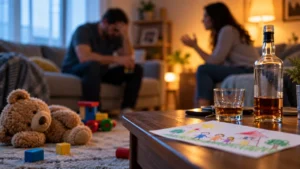

When a family member or close friend struggles with alcoholism, the people who love them often feel profoundly alone. They may feel ashamed to tell others what’s happening. They may have tried everything they know and watched it fail. They may be exhausted, frightened, angry, and heartbroken — often all at once. Al-Anon was created for exactly these people.
Founded in 1951 as a companion to Alcoholics Anonymous, Al-Anon Family Groups offers a peer support community for anyone affected by someone else’s drinking. It is one of the longest-standing, most widely available, and most effective resources for family members — and it costs nothing. This article explains what Al-Anon is, its philosophy, what meetings look like, the role of sponsorship, and how it differs from Codependents Anonymous.
AL-ANON’S HISTORY & PHILOSOPHY
Al-Anon grew out of a practical observation: the partners and families of people in AA were also suffering, and they needed their own space and support. Lois Wilson (wife of AA co-founder Bill W.) and Anne B. began organizing Al-Anon in 1951, drawing on the 12-Step principles of AA and adapting them to the specific experience of the family member.
The fundamental philosophy of Al-Anon rests on several core principles:
The Three Cs. Al-Anon’s most central teaching, often cited at every meeting: “I didn’t Cause it, I can’t Control it, and I can’t Cure it.” This is both a statement about addiction and a profound relief for family members who have spent years believing — often in ways they weren’t even fully conscious of — that the right combination of love, persuasion, management, or sacrifice could fix the problem. The Three Cs release the family member from an impossible responsibility.
Focus on self, not the person with addiction. Al-Anon explicitly redirects family members away from obsessing over the person in addiction and toward their own lives, feelings, choices, and wellbeing. This is often counterintuitive for people who have organized themselves around the person in addiction.
Detachment with love. The practice of releasing the compulsion to control or fix, while maintaining genuine care — described in the codependency article and central to Al-Anon’s approach.
Spiritual principles without specific religion. Al-Anon, like AA, references a “Higher Power” and spiritual principles, but is not affiliated with any specific religion and welcomes people of all faiths and no faith.
THE THREE CS: CAUSE, CURE, CONTROL
The Three Cs deserve more attention because they are so central to Al-Anon’s healing work for family members.
“I didn’t Cause it.” Addiction is a complex condition involving neurobiology, genetics, trauma, environment, and choice. It is not caused by the love someone received — or failed to receive — from family members. Parents, partners, and children of people with addiction commonly carry enormous guilt and self-blame: if only I had been a better parent / partner / sibling. Al-Anon’s first C offers release from this guilt. It is not your fault.
“I can’t Control it.” One of the most painful aspects of watching a loved one’s addiction is the desperate attempt to control or manage it — monitoring their behavior, hiding substances, extracting promises, managing their environments. This controlling behavior is exhausting, futile, and erodes the family member’s own wellbeing. The second C offers freedom from a compulsion that can’t succeed.
“I can’t Cure it.” Ultimately, the person in addiction must choose their own recovery. The family member cannot achieve it for them, however much they love them, however much they sacrifice. This truth is painful, but accepting it is also liberating — it places the responsibility for recovery where it belongs and frees the family member to attend to their own life.
These three principles together form the core of Al-Anon’s message: you cannot fix this, and trying to is destroying you. There is another way.
MEETING FORMATS
Al-Anon meetings are widely available, free to attend, and run by members rather than professionals. Understanding what to expect helps people approach their first meeting with less anxiety.
Types of meetings:
- Open meetings. Open to anyone, including people who are not personally affected by alcoholism — family members, friends, or people curious about the program.
- Closed meetings. Open only to people who have a family member or friend with an alcoholism problem.
- Speaker meetings. One or more members share their personal stories of experience with a loved one’s drinking and their own recovery through Al-Anon.
- Discussion meetings. A topic is introduced (often from Al-Anon literature) and members share their thoughts, experiences, and feelings on it. This is the most common meeting format.
- Step meetings. Focused on working through one of the 12 Steps, with members discussing its meaning and their experience applying it.
What happens at a meeting:
- A brief opening (often a reading of Al-Anon’s Preamble and other literature).
- Introductions around the room: “I’m [name], and I’m affected by someone else’s drinking.”
- Sharing — members speak from their own experience, often on a topic or step. There is no cross-talk (advice-giving, disagreement, or response to what others share). Each person speaks only for themselves.
- A brief closing.
Meetings typically last about an hour. First-timers are often encouraged to simply listen; sharing is never required.
Finding meetings:
Al-Anon’s website (al-anon.org) provides a meeting finder by location and time. Online and phone meetings are also available for those who can’t attend in person.
SPONSORSHIP & SERVICE
Like AA, Al-Anon uses the sponsorship model and encourages service as components of recovery.
Sponsorship.
A sponsor is a more experienced Al-Anon member who has worked the steps and supports a newer member in their journey. The sponsor relationship provides personalized guidance, support in working the steps, and a consistent point of contact between meetings. Finding a sponsor is not required immediately but becomes more valuable as involvement deepens.
Step work.
Al-Anon uses the same 12 Steps as AA, adapted for the family perspective. Working the steps — often with a sponsor — is the core of the spiritual and personal recovery work in Al-Anon. It’s not simply attending meetings; it’s an active engagement with a recovery process.
Service.
Contributing to the group — greeting newcomers, making coffee, taking a service position — is encouraged as both a way of giving back and a component of recovery. Service interrupts the self-focused suffering that addiction often produces in family members and reconnects people with a sense of purpose and community.
AL-ANON VS CODEPENDENTS ANONYMOUS
Al-Anon and Codependents Anonymous (CoDA) are related but distinct resources, and understanding the difference helps people choose the right fit.
Al-Anon:
- Focused specifically on people affected by someone else’s drinking.
- Uses the 12-Step framework adapted for family members.
- Large, widely available network with meetings in nearly every community.
- Spiritual (though not religious) orientation.
Codependents Anonymous (CoDA):
- Broader in scope — for people who identify with codependent patterns in relationships, not limited to alcohol or addiction contexts.
- Also uses a 12-Step framework, focused specifically on codependency recovery.
- Less widely available than Al-Anon but still substantial.
- Focused on recovering one’s own identity and self in relationships, rather than specifically on the alcoholism context.
For family members of people with alcohol use disorder, Al-Anon is typically the more specific and widely accessible starting point. Nar-Anon (for families affected by any drug addiction, not only alcohol) is also available and follows a similar model. Some people attend multiple programs and find value in both.
FREQUENTLY ASKED QUESTIONS
What is Al-Anon?
Al-Anon Family Groups is a peer support program for family members, friends, and others affected by someone else’s drinking. It uses the 12-Step framework, is free to attend, is widely available, and is run by members rather than professionals.
What are the Three Cs of Al-Anon?
“I didn’t Cause it, I can’t Control it, and I can’t Cure it.” Al-Anon’s central teaching, releasing family members from the false belief that they caused the addiction and from the futile attempt to control or fix it.
What happens at an Al-Anon meeting?
A typical meeting includes a brief opening with readings, member introductions, sharing from members on a topic or step (without cross-talk or advice), and a brief closing. Meetings last about an hour. Sharing is never required for newcomers.
How is Al-Anon different from Codependents Anonymous?
Al-Anon is specifically for those affected by someone else’s drinking, using a 12-Step framework. CoDA is broader — for people with codependent patterns in any relationship context — also using 12 Steps. Both are valuable; Al-Anon is generally more widely available and the more specific starting point for those with a family member with alcohol use disorder.
Recommended Reading
- Family Support for Addiction: How Loved Ones Heal Too
- Codependency and Addiction: Healing the Partnership of Pain
- How to Help an Addict Without Enabling Them
- Services and Programs at Oceánica
EXTERNAL REFERENCE LINKS
Oceánica is a CARF-accredited residential treatment center in Mazatlán, Mexico. This article is informational and not medical advice. Call (213) 527-3377 or visit oceanica-usa.com.