
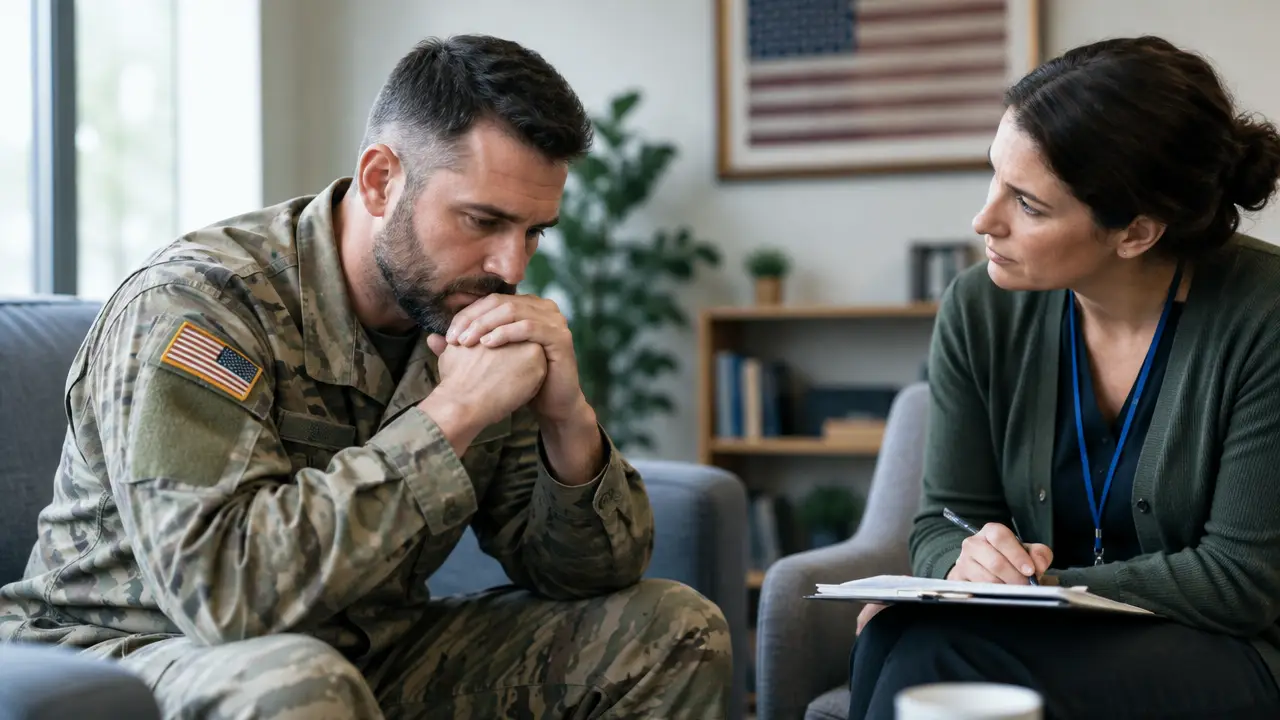
Veterans experience substance use disorders at rates significantly higher than the civilian population — and carry specific burdens that shape both the addiction and what effective treatment requires. Combat trauma, moral injury, traumatic brain injury, chronic pain, the culture of military service, and the challenges of reintegration to civilian life all intersect in ways that standard addiction treatment programs often don’t address with the depth and specificity that veteran experience requires.
Effective treatment for veterans honors their service by taking seriously what their service has cost them — and by providing care that genuinely understands the specific context in which their addiction developed.
IMPORTANT DISCLAIMER: This article is informational and not medical advice. Veterans in crisis can contact the Veterans Crisis Line: call 988 and press 1, text 838255, or chat at veteranscrisisline.net. All treatment decisions are made by qualified professionals.
STATISTICS ON VETERAN ADDICTION
The data on substance use in the veteran population is striking:
- Veterans experience higher rates of alcohol use disorder than civilians — with alcohol being by far the most commonly misused substance in the veteran population.
- Prescription opioid misuse is also elevated, driven in part by high rates of chronic pain from service-related injuries and the prescribing practices associated with treating them.
- Veterans diagnosed with PTSD have substantially elevated rates of substance use disorder — the connection between combat trauma and substance use is among the most consistently documented findings in veteran mental health research.
- Suicide rates in veterans are significantly higher than the civilian population — a crisis that has driven significant attention to veteran mental health and to the connections between PTSD, addiction, and suicide risk. Veterans in crisis should contact the Veterans Crisis Line: call 988 and press 1.
These statistics aren’t just numbers — they reflect the cumulative cost of military service and the specific vulnerabilities that service creates.
COMBAT TRAUMA & MORAL INJURY
For veterans who have experienced combat, two overlapping but distinct psychological burdens require specific therapeutic attention.
Combat trauma and PTSD:
Combat exposure produces PTSD at high rates, with features that have specific characteristics in the veteran context. The traumatic experiences may be multiple and cumulative — not a single incident but a sustained period of exposure to violence, death, threat, and survival-level threat response. The hypervigilance, intrusive memories, avoidance, and hyperarousal of PTSD persist long after the operational environment has ended.
Combat PTSD responds to the same evidence-based treatments as other PTSD presentations — EMDR, CPT, trauma-focused therapy — but the specific content of the traumatic experiences, and the cultural context in which they occurred, require clinical understanding of military experience.
Moral injury:
Moral injury is a related but distinct burden that is particularly prominent in veterans. It describes the deep distress produced by exposure to events that violate one’s moral code, or by one’s own actions (or failures to act) that conflict with deeply held values. Examples include:
- Being unable to save fellow service members or civilians.
- Being ordered to do things that felt morally wrong.
- Surviving when others didn’t.
- Witnessing or participating in actions whose moral status remains unresolved.
Moral injury is not simply guilt — it’s a fundamental disruption of the moral framework through which the person understood themselves and the world. It responds to different therapeutic approaches than classic PTSD, often requiring meaning-making, existential exploration, and sometimes engagement with religious or spiritual dimensions of the experience.
Treatment that conflates moral injury with PTSD and applies only trauma-focused interventions misses a crucial dimension of veteran suffering.
VA VS PRIVATE CARE OPTIONS
Many veterans have access to VA (Department of Veterans Affairs) healthcare, and it’s important to understand how VA services and private treatment options compare and complement each other.
VA benefits and services:
- VA healthcare provides mental health and substance use treatment services at VA facilities for eligible veterans.
- The VA has dedicated programs for PTSD, substance use, and veteran-specific conditions.
- VA services are funded by the government and are free or low-cost for eligible veterans.
- Quality varies significantly by facility and waitlist times can be long for specialized services.
Private treatment considerations:
- Private residential treatment programs like Oceánica provide intensive, immersive care that VA outpatient services typically can’t match in intensity.
- Private care may be faster to access, with no waitlist for specialized services.
- Private care is generally not covered by VA benefits (though veterans may have private insurance or family support for treatment costs).
- Privacy concerns may be more easily managed in private, non-VA settings.
- Private care international programs like Oceánica may be particularly attractive to veterans concerned about privacy from military records or who seek treatment away from military communities.
VA and private care are not mutually exclusive. Many veterans receive acute intensive treatment through private programs and then transition to VA services for ongoing outpatient care, medication management, and continued support — a step-down pathway that combines the intensity of private residential care with the ongoing support of VA services.
At Oceánica, the admissions team can help veterans understand how the program fits within their broader care landscape and how to connect with VA services after discharge.
VETERAN-AWARE THERAPY
Veteran-aware therapy doesn’t require clinicians who have served — though lived military experience can be valuable. It requires clinical understanding of military culture, occupational context, and the specific psychological experiences of service.
What veteran-aware therapy includes:
Understanding military culture. The values, hierarchy, terminology, and occupational norms of military service shape how veterans experience and communicate about their psychological experiences. A therapist unfamiliar with military culture requires veterans to translate — slowing the therapeutic work and creating distance.
Understanding the transition to civilian life. The reintegration challenges of leaving military service — the loss of identity, structure, mission, and community that military life provides — are often underestimated and underaddressed. These transition challenges frequently underlie or exacerbate addiction.
Moral injury work. Specific therapeutic approaches for moral injury — narrative work, meaning-making, connection to values — are different from standard trauma therapy and require intentional integration.
Peer connection. Veterans in treatment benefit significantly from peer connection with other veterans — the shared understanding of military experience creates a particular bond and validation.
Addressing survivor’s guilt. A specific feature of veteran experience that requires therapeutic space — the complex guilt of having survived when others didn’t, and the burden this carries into civilian life.
At Oceánica, the clinical team provides individualized, veteran-aware care within the evidence-based treatment framework. Veterans receive personalized attention to the specific dimensions of their military experience that are relevant to their treatment.
INTERNATIONAL TREATMENT CONSIDERATIONS
Some veterans are drawn to treatment outside the U.S. — at programs like Oceánica in Mexico — and there are specific considerations worth understanding.
Privacy and distance. The geographic distance from the U.S. provides a degree of separation from military communities, VA system records, and professional contexts that some veterans value. Oceánica maintains full patient confidentiality, and the Mexico location is entirely separate from U.S. government records.
High-quality care at lower cost. Oceánica’s CARF-accredited program provides evidence-based, comprehensive care at substantially lower cost than comparable U.S. programs — making high-quality residential treatment accessible to veterans who don’t have VA coverage for private residential treatment.
Culturally affirming experience. Mazatlán’s coastal environment, the temazcal ceremony, and the integration of wellness activities provide a restorative setting that many veterans find deeply different from clinical hospital environments.
Coordination with U.S. providers. Oceánica’s aftercare planning includes connecting veterans with U.S.-based outpatient providers, VA services, and peer support resources before discharge — ensuring continuity of care after the residential period.
FREQUENTLY ASKED QUESTIONS
Why do veterans face higher rates of addiction?
Combat trauma and PTSD, moral injury, chronic pain from service injuries, the cultural normalization of alcohol use in military contexts, transition challenges from military to civilian life, and the loss of identity, structure, and community that military service provided all contribute.
What is moral injury and how does it differ from PTSD?
PTSD is a response to fear-based traumatic experiences. Moral injury is distress produced by events that violate one’s moral code — actions or failures to act that conflict with deeply held values, witnessing injustice, or surviving when others didn’t. Both can coexist; both require specific therapeutic attention.
Should veterans use VA services or private treatment?
Both have value and are not mutually exclusive. VA provides ongoing, covered outpatient care; private residential treatment provides intensive, immersive care that VA outpatient typically can’t match. Many veterans benefit from private residential treatment for initial intensive work followed by VA services for continued outpatient support.
If a veteran is in crisis, where should they turn?
Veterans Crisis Line: call 988 and press 1, text 838255, or chat online at veteranscrisisline.net. This is available 24/7 and is specifically for veterans and service members.
Recommended Reading
- PTSD Treatment in Mexico: Trauma-Focused Residential Care
- Trauma-Informed Rehab: Why It Matters for Recovery
- Complex PTSD (C-PTSD) Treatment: Healing Long-Term Trauma
- Services and Programs at Oceánica
EXTERNAL REFERENCE LINKS
- Veterans Crisis Line: https://www.veteranscrisisline.net (or call 988, press 1)
- VA Mental Health Services
- SAMHSA National Helpline
- Oceánica Conecta
Oceánica is a CARF-accredited residential treatment center in Mazatlán, Mexico, providing veteran-aware, individualized addiction and trauma treatment. Veterans in crisis: call 988 and press 1. This article is informational and not medical advice. Call (213) 527-3377 or visit oceanica-usa.com.