IMPORTANT DISCLAIMER: This article provides general informational guidance. Customs and border regulations can change. Consult your prescribing physician and Oceánica’s admissions team about medication-specific requirements before travel.
Most patients traveling to Oceánica enter Mexico by air — flying directly into Mazatlán’s General Rafael Buelna International Airport (MZT). The border crossing experience for air travelers is the standard airport immigration and customs process, which the vast majority of U.S. patients complete without any difficulty.
This article covers the key customs and border considerations relevant to rehab travelers — primarily medication transport and re-entry to the U.S. after treatment.
BRINGING MEDICATIONS ACROSS
Medications are the primary area where rehab travelers need to pay specific attention to border crossing rules.
For entry into Mexico (outbound — leaving the U.S.):
U.S. Customs and Border Protection (CBP) has no restrictions on taking personal prescription medications out of the country. There are no exit controls for medications when leaving the U.S. by air.
For entry into Mexico (Mexican customs):
Mexico allows travelers to bring personal-use prescription medications without special documentation for most medications. However, some controlled substances require specific documentation or are restricted.
Key medication considerations for Mexico entry:
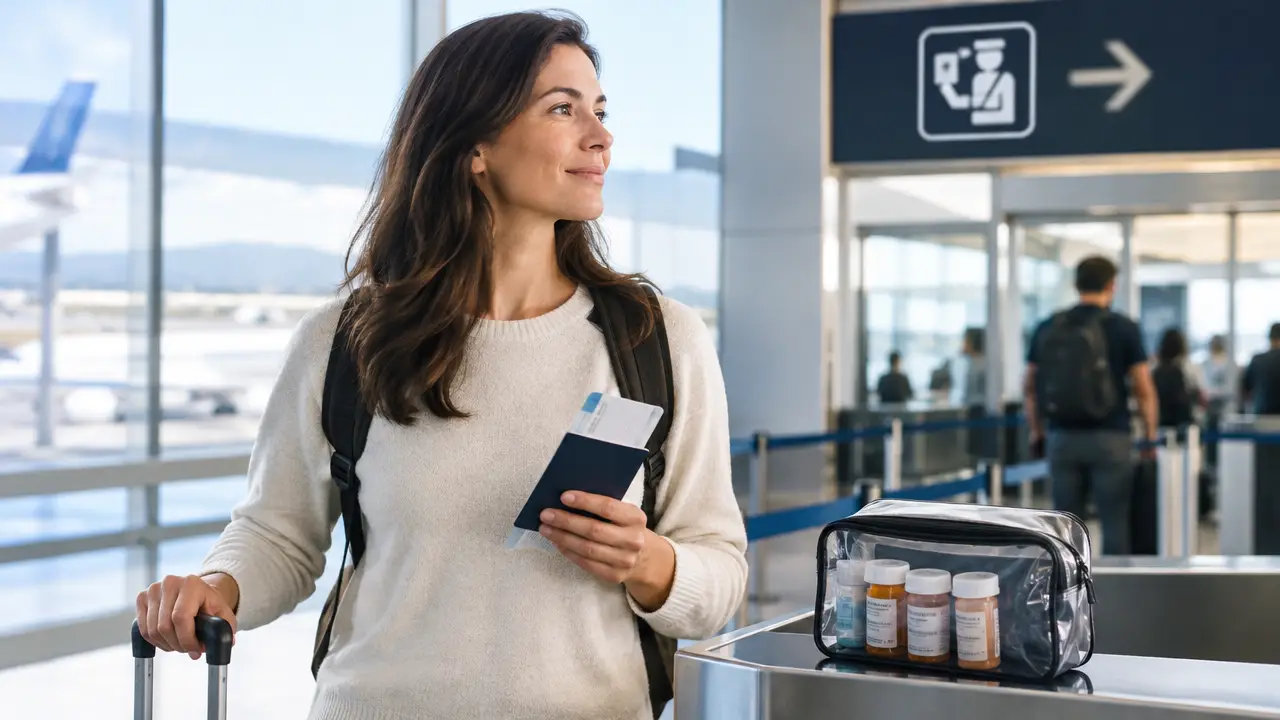
- Prescription medications in original labeled containers: Always bring medications in their original pharmacy bottles with the prescription label. This is the most important documentation.
- Controlled substances: Controlled substances (including opioids, benzodiazepines, and stimulant medications) require a valid prescription from the prescribing physician. For 45 days of treatment, bring a copy of the written prescription in addition to the labeled bottle.
- Quantity: The permitted quantity for personal use is generally a 30-day supply for most medications. For 45 days of treatment, Oceánica’s admissions team can advise on documentation to support bringing a slightly larger supply.
- Specific restricted substances: Some substances that are legal in the U.S. (certain controlled medications) have different legal status in Mexico, or require additional documentation. Consult with Oceánica’s admissions team before travel regarding any medications in Schedule II or III.
- Oceánica manages medications during the stay: Once admitted, Oceánica’s medical team manages all medications — including any adjustments, additions, or medication management decisions. Patients don’t need to self-manage medications during the residential period.
WHAT TO DECLARE
Mexican customs declaration:
On arrival in Mexico, passengers complete a customs declaration form (typically distributed on the aircraft). The key declaration items:
- Quantities of goods exceeding Mexico’s duty-free allowances
- Currency exceeding $10,000 USD (or equivalent)
- Business goods or commercial merchandise
- Firearms or weapons
- Food items above specified limits
For most rehab travelers, the declaration is straightforward — personal clothing, personal items, prescription medications, and electronic devices are routine personal belongings that do not trigger customs examination.
The “green light / red light” system:
Mexico uses a random inspection system at customs: passengers press a button that randomly selects a green light (pass without inspection) or red light (secondary inspection of bags). Most passengers receive a green light; a red light simply means a brief bag inspection, which is not cause for concern for travelers with normal personal belongings and properly documented medications.
RE-ENTRY TO THE U.S.
After completing treatment at Oceánica, returning to the U.S. by air involves U.S. Customs and Border Protection (CBP) at the first U.S. port of entry.
What to expect at U.S. re-entry:
- Present valid U.S. passport
- Complete the CBP arrival form (currently replaced by the APC kiosk system at most airports)
- CBP questioning is typically brief and routine for U.S. citizens returning from Mexico
Medications on return:
Bringing prescription medications back to the U.S. is permitted for personal use. Bring:
- Original labeled prescription containers
- Copies of prescriptions for controlled substances
- A medication list from Oceánica’s medical team documenting any changes made during treatment (this supports continuity of care and clarifies any changes in medication regimen at U.S. re-entry if questioned)
What CBP may ask:
CBP officers may ask routine questions: where you traveled, how long you were there, what you were doing. “I was receiving medical treatment” is a complete and appropriate answer. You are not required to disclose the specific nature of medical treatment.
Currency on return:
If returning with $10,000 or more in cash or equivalent, CBP requires declaration. This is unlikely for most rehab travelers.
WHEN MID-TREATMENT TRAVEL ISN’T ALLOWED
Leaving the treatment facility during the residential period:
Oceánica’s residential program is, by design, a contained residential experience. Patients are not expected to travel during the treatment period — the structure, consistency, and separation from the original environment are therapeutic dimensions of the program.
Mid-treatment travel outside the facility is generally not clinically appropriate and is not part of the standard program. In specific circumstances (a family emergency that requires return to the U.S.), the clinical team addresses these situations case by case.
EMERGENCY RE-ENTRY
If a family emergency or medical situation requires a patient to return to the U.S. before completing the program:
Oceánica’s clinical team manages emergency early departure situations with the patient’s safety and wellbeing as the primary concern. This includes:
- Clinical assessment of readiness for safe travel
- Medication documentation and supply for the return and transition period
- Coordination with U.S.-based providers where possible
- Documentation of treatment completed to date for U.S. providers
Emergency return to the U.S. from Mexico is logistically feasible — Mazatlán has regular daily flights, and the travel time is short. Same-day emergency return is typically possible.
FREQUENTLY ASKED QUESTIONS
Do I need special documentation to bring my medications to Mexico?
Bring all prescription medications in original labeled pharmacy containers with a copy of the written prescription for controlled substances. For extended stays, Oceánica’s admissions team can advise on appropriate documentation based on your specific medications.
What do I declare when entering Mexico?
Standard personal belongings, prescription medications, and electronics don’t require declaration. Currency over $10,000 USD, commercial merchandise, and certain food items require declaration. The Mexican customs form is straightforward for most rehab travelers.
Can I return to the U.S. early if there’s a family emergency?
Yes. Mazatlán has regular daily flights and same-day return is typically feasible. Oceánica’s clinical team manages early departure situations with patient safety as the priority, including medication documentation for the return.
What happens if CBP asks why I was in Mexico?
“I was receiving medical treatment” is a complete and accurate answer. You are not required to disclose the specific nature of medical treatment to CBP. Your medical information is protected.
Recommended Reading
- Traveling to Mexico for Rehab Safely: Logistics Guide
- Do You Need a Passport for Rehab in Mexico?
- Admissions Process at Oceánica
- Services and Programs at Oceánica
EXTERNAL REFERENCE LINKS
- U.S. CBP — Medication
- Mexico INM — Entry Requirements
- U.S. State Department — Mexico Travel
- Oceánica Conecta
Oceánica is a CARF-accredited residential treatment center in Mazatlán, Mexico. For specific pre-travel questions, call (213) 527-3377 or visit oceanica-usa.com. This article is informational and not legal or medical advice.