
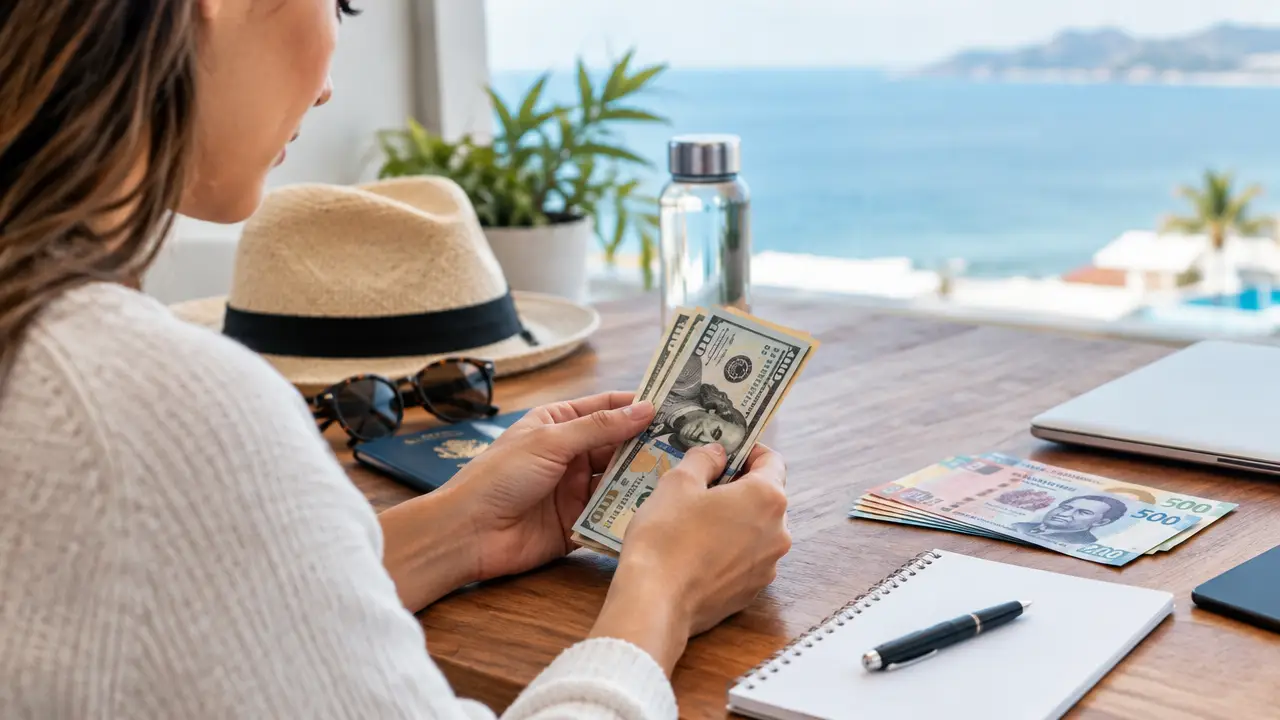
Patients preparing for treatment at Oceánica frequently ask practical questions about money: How does Oceánica bill? Do I need Mexican pesos? How much cash should I bring? Can my family send money if needed? These are straightforward questions with practical answers.
HOW OCEÁNICA BILLS
Oceánica’s primary billing currency is USD (U.S. dollars). The program fee is established and paid in USD, and all primary billing communications are conducted in English with U.S. patients.
Program fees:
- 45 days of treatment in the mood/burnout program: approximately $12,500–$13,500 USD
- 45 days of treatment in the substance use program: approximately $15,400–$16,400 USD
- 45-day extended substance use program: approximately $18,100–$19,100 USD
Payment:
Program fees are typically paid before or at admission. Accepted payment methods are confirmed with the admissions team; wire transfer, bank transfer, and credit card are common options. The admissions team provides specific payment instructions during the pre-admission process.
Personal-incidentals deposit:
A small, refundable deposit for personal incidentals is collected at admission. This deposit covers incidental personal expenses that arise during the stay (specific purchases, certain personal items) and is refunded minus any incidental charges at discharge.
Oceánica does not bill U.S. insurance directly. Patients pay out of pocket and can request documentation for potential reimbursement from their insurance if they have out-of-network benefits.
USD VS MXN AT THE FACILITY
During the treatment stay, currency needs are minimal — meals, accommodation, clinical services, and wellness activities are all included in the program fee.
At the facility:
- The program fee covers all clinical services, meals, and accommodation.
- Oceánica is comfortable with both USD and MXN for any small personal transactions within the facility.
- USD is accepted widely in Mazatlán’s tourist zone for most transactions involving international visitors.
What currency to bring:
For daily life within the facility during the residential program, patients have very little need for cash — almost everything is covered by the program fee. A small amount of cash (in either USD or MXN) for personal incidentals — a personal item purchased, a snack, a small purchase — is appropriate.
Recommendation: Bring the equivalent of $50-150 USD in cash for personal incidentals during 45 days of treatment. This can be in USD or MXN; both are usable.
ATM ACCESS
For family members visiting Mazatlán, or for patients who need additional funds during their stay, ATM access is available.
In Mazatlán:
ATMs are widely available throughout Mazatlán’s tourist zone — at major banks, hotel lobbies, and shopping areas. ATMs dispense Mexican pesos (MXN).
Using U.S. bank cards:
U.S. debit and credit cards work in most Mexican ATMs. Standard international transaction fees (typically 1-3%) and ATM fees may apply. Notify your bank before travel that you’ll be using your card in Mexico to prevent fraud protection holds.
Exchange rates:
Using ATMs for pesos generally provides a better exchange rate than cash exchange services. Avoid exchanging currency at airports where rates are typically less favorable.
Credit cards:
Major U.S. credit cards (Visa, Mastercard) are accepted at most tourist-zone hotels, restaurants, and larger stores in Mazatlán. Smaller local establishments may be cash-only. Inform your credit card issuer before travel to prevent security holds.
CASH FOR SMALL EXPENSES
During a residential treatment stay, the primary cash needs are minimal. Situations where a small amount of cash is useful:
- Personal toiletries or items not brought from home
- A small purchase at a local shop (if a supervised outing occurs)
- Tips for specific service situations
- Personal preference for having a small buffer
What patients typically don’t need cash for:
- Meals (included)
- Clinical services (included)
- Wellness facilities: gym, pool, volleyball, soccer (included)
- Temazcal ceremony (included as part of wellness program)
- Accommodation (included)
The program fee covers the overwhelming majority of expenses for the residential period. Cash needs during the stay are genuinely minimal.
FAMILY SENDING MONEY
If a family member needs to send additional funds to a patient during treatment:
The most practical options:
International wire transfer or bank-to-bank transfer in USD or MXN is the most reliable method for larger amounts.
Digital payment services: Services like Wise (formerly TransferWise) or Remitly provide reliable international money transfers with competitive exchange rates.
Cash on a family visit: If a family member visits during treatment, bringing cash is the simplest option for small amounts.
Contact Oceánica’s admissions team for specific guidance if a family needs to send funds to a patient — the team can advise on the most practical method for the specific situation.
FREQUENTLY ASKED QUESTIONS
What currency does Oceánica accept for the program fee?
The program fee is paid in USD (U.S. dollars). Oceánica communicates and bills in USD for U.S. patients. The admissions team provides specific payment instructions and accepted payment methods.
How much cash should I bring to Mexico for rehab?
Approximately $50-150 USD equivalent for personal incidentals during 45 days of treatment. Almost all program expenses (meals, clinical services, wellness facilities, accommodation) are covered by the program fee. Cash needs during the residential stay are minimal.
Does Oceánica take credit cards?
Payment method options are confirmed with the admissions team during the pre-admission process. Common options include wire transfer, bank transfer, and credit card. Contact (213) 527-3377 for current payment options.
Can I use my U.S. debit card in ATMs in Mazatlán?
Yes. U.S. debit cards work in most Mexican ATMs (which dispense Mexican pesos). Standard international transaction fees apply. Notify your bank before travel. ATMs are available throughout Mazatlán’s tourist zone.
Recommended Reading
- Rehab in Mexico Cost
- Is Rehab in Mexico Covered by Insurance?
- Traveling to Mexico for Rehab Safely: Logistics Guide
- Services and Programs at Oceánica
EXTERNAL REFERENCE LINKS
- Wise — International Transfers
- U.S. State Department — Money Abroad
- SAMHSA — Paying for Treatment
- Oceánica Conecta
Oceánica is a CARF-accredited residential treatment center in Mazatlán, Mexico. For billing and payment questions, call (213) 527-3377 or visit oceanica-usa.com. A small refundable personal-incidentals deposit is collected at admission. Oceánica does not bill U.S. insurance directly.







