
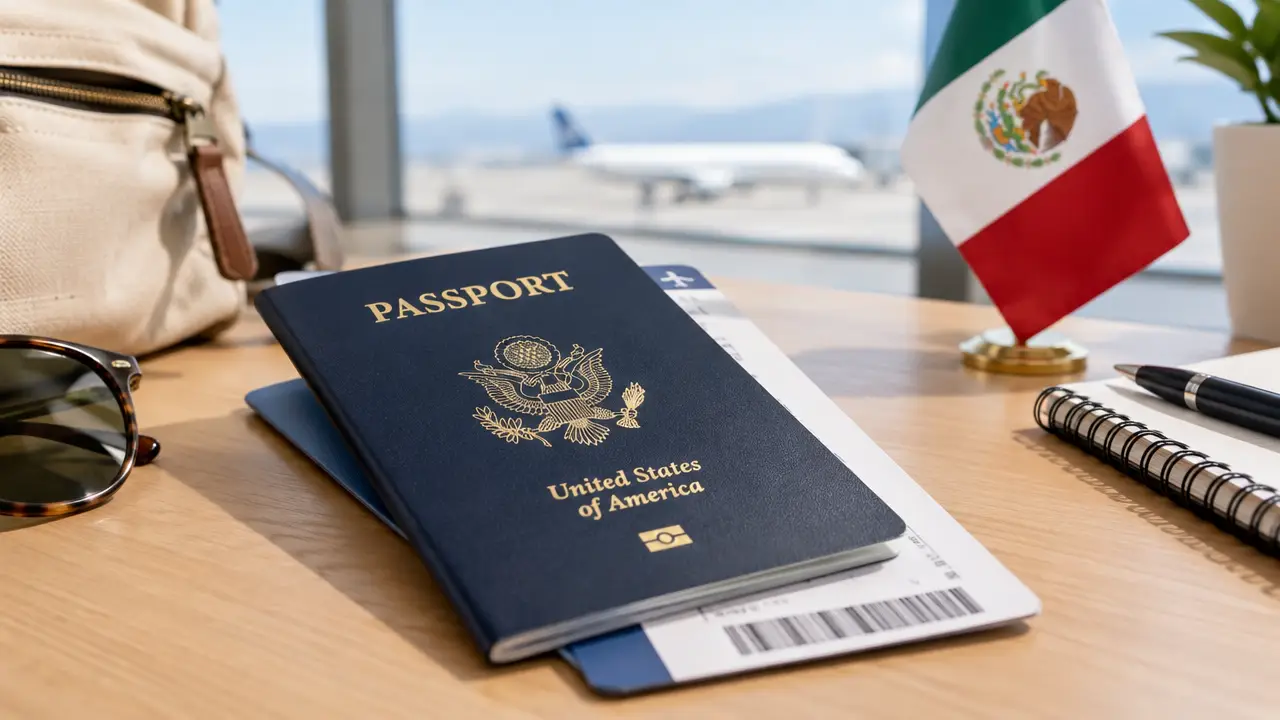
The short answer: yes. U.S. citizens traveling to Mexico by air require a valid U.S. passport to enter the country. A driver’s license, state ID, or passport card (which is only valid for land border crossings and sea travel) is not sufficient for air travel to Mexico. If you’re considering treatment at Oceánica in Mazatlán and don’t have a current passport, this is an important logistical item to address early in the admissions process.
The good news: expedited passport options exist that can produce a passport in as few as 2-3 business days when needed urgently.
PASSPORT REQUIREMENTS FOR U.S. CITIZENS
The Western Hemisphere Travel Initiative (WHTI), implemented in 2009, requires U.S. citizens to present a valid passport when entering Mexico by air.
What you need:
- A valid U.S. passport book (not a passport card)
- Valid for the duration of your stay in Mexico
- In good condition (not damaged, torn, or missing pages)
What doesn’t work for air travel:
- U.S. driver’s license
- State or federal ID
- Birth certificate alone
- Passport card (only valid for land border crossings and sea travel, not air travel)
- Military ID (unless traveling on official military orders)
Passport validity:
While Mexico doesn’t formally require a minimum validity period beyond the length of stay, it’s generally recommended to have at least 6 months of validity beyond the end of your planned stay. If your passport expires within a few months, renewing before treatment is advisable.
EXPEDITED PASSPORT OPTIONS
If you need a passport quickly — because treatment admission is scheduled soon — there are legitimate expedited options that can produce a passport in a significantly shorter timeframe than standard processing.
Standard passport processing:
Standard State Department processing takes 6-8 weeks (or more during peak periods). This is too slow for most treatment planning timelines.
Expedited processing (U.S. State Department):
The State Department offers official expedited processing that reduces the timeline to approximately 2-3 weeks for a fee of $60 above standard fees. Apply online at travel.state.gov and mark “expedited” on the application.
Appointment-based expedited processing:
For urgent needs, a passport appointment at a regional passport agency can produce a passport in as little as 1-3 business days. These appointments are available only for life-or-death emergencies or urgent international travel within 14 business days (with a travel documentation requirement). Contact the National Passport Information Center: 1-877-487-2778.
Third-party expedited passport services:
Several legitimate commercial expediting services (CIBT, ItsEasy, and others) specialize in obtaining passports quickly through established government channels. These services charge additional fees (typically $100-250) but can often produce passports in 2-7 business days for routine urgent travel, without requiring a life-or-death emergency appointment.
If treatment admission is scheduled within 1-2 weeks and you don’t have a passport, contacting a third-party expediting service immediately is the most practical approach.
TOURIST CARD / FMM
In addition to a passport, U.S. citizens entering Mexico require a Forma Migratoria Múltiple (FMM) — the Mexican tourist card that tracks your entry, purpose of visit, and planned length of stay.
Current FMM process:
The FMM is now completed digitally online before arrival at: https://www.inm.gob.mx/fmme/publico/en/solicitud.html
Alternatively, it can be completed on paper upon arrival at the Mexican port of entry, though completing it digitally before departure is recommended for a smoother immigration process.
What the FMM requires:
- Personal information (name, passport number, date of birth, nationality)
- Purpose of visit (select “tourism”)
- Planned length of stay
The FMM is free for stays up to 180 days. It is issued when you enter Mexico and should be kept with your passport throughout your stay and surrendered when you depart.
Oceánica’s admissions team provides guidance on completing the FMM as part of pre-arrival support.
DOCUMENTATION AT THE AIRPORT
At MZT (Mazatlán’s General Rafael Buelna International Airport) immigration:
You will proceed through Mexican immigration, where you will:
- Present your valid U.S. passport
- Present your completed FMM tourist card
- Answer basic immigration questions (purpose of visit, length of stay)
- Receive an entry stamp in your passport
Mexican immigration at MZT is experienced with international visitors and the process is typically straightforward for U.S. citizens.
After immigration:
Collect your checked baggage, proceed through customs (complete the customs declaration form distributed on the aircraft), and exit to the arrivals area where Oceánica’s driver will meet you.
IF YOU DON’T HAVE TIME
If you’re facing an urgent admission timeline and don’t have a passport, the prioritized steps are:
- Contact Oceánica’s admissions team immediately at (213) 527-3377. The team can discuss admission timeline flexibility and what’s needed.
- Contact a third-party expedited passport service (CIBT, ItsEasy, etc.) immediately. With proof of international travel and fees, these services can often produce a passport in 2-7 business days.
- If the situation is truly urgent (days, not weeks), contact the State Department’s National Passport Information Center at 1-877-487-2778 to discuss emergency appointment options.
- If you can prove life-threatening medical urgency, an emergency passport appointment may be possible within 1-2 business days.
- For some very urgent admissions, Oceánica’s admissions team may be able to discuss whether a brief delay in travel date while the passport is processed is clinically feasible.
The key message: not having a passport is a logistical problem with solutions — not a reason to delay seeking treatment entirely.
FREQUENTLY ASKED QUESTIONS
Do I need a passport to go to Mexico for rehab?
Yes. U.S. citizens traveling to Mexico by air require a valid U.S. passport book. A driver’s license, state ID, or passport card is not sufficient for air travel.
What if my passport is expired?
Renew it, using expedited processing if needed. Third-party expediting services can often produce a renewed passport in 2-7 business days for a fee. Standard State Department processing takes 6-8 weeks — too slow for most admission timelines.
What is the FMM and how do I get it?
The FMM (Forma Migratoria Múltiple) is Mexico’s tourist entry card, tracking your entry and length of stay. It’s completed digitally online before departure at the Mexican immigration website, or on arrival at the airport. Oceánica’s admissions team provides guidance.
How quickly can I get a passport if I need treatment urgently?
Through third-party expediting services: typically 2-7 business days. Through a State Department emergency appointment (for documented urgency): 1-3 business days. Contact Oceánica’s admissions team at (213) 527-3377 to discuss timing and options.
Recommended Reading
- Traveling to Mexico for Rehab Safely: Logistics Guide
- What to Pack for Rehab in Mexico: Complete Checklist
- Admissions Process at Oceánica
- Services and Programs at Oceánica
EXTERNAL REFERENCE LINKS
- U.S. State Department — Passports
- U.S. State Department — Expedited Passports
- Mexico FMM Tourist Card
- Oceánica Conecta
Oceánica is a CARF-accredited residential treatment center in Mazatlán, Mexico. For pre-admission logistics support, call (213) 527-3377 or visit oceanica-usa.com.