
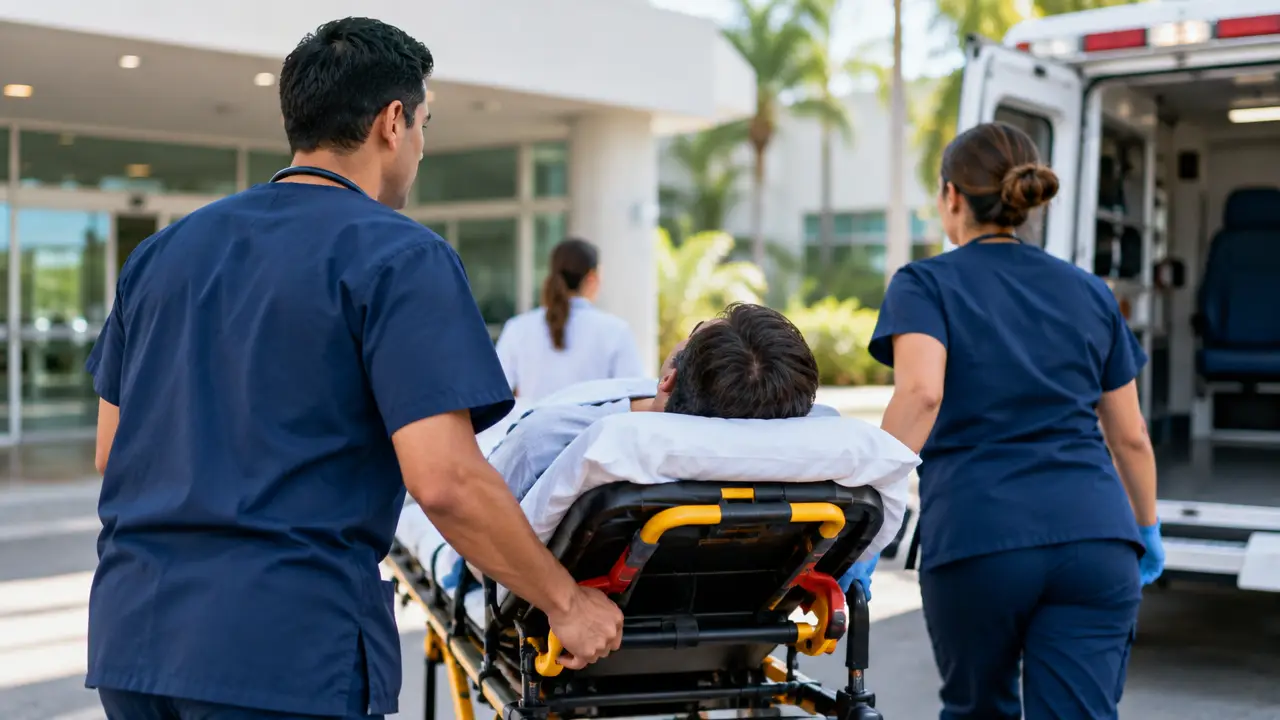
Medical emergencies during residential treatment are rare but real, and families considering international treatment often want to understand what happens if something goes wrong. This is a reasonable concern with a clear answer: Oceánica is medically staffed and has established emergency protocols and hospital relationships that address the full range of medical situations that can arise during a residential stay.
ON-SITE MEDICAL CAPABILITIES
Oceánica’s residential program is medically staffed — it is not a spa or wellness retreat with clinical pretensions. The on-site medical team provides:
Continuous medical presence: Medical technicians (técnicos en urgencias médicas) are present throughout the residential program. Medical oversight by qualified physicians is integrated into the program.
Daily health monitoring: Vital signs, medication management, clinical observation, and response to emerging medical concerns are managed by the on-site medical team as part of daily program operations.
Medically supervised detox: For patients requiring detox, medical supervision with appropriate pharmacological support is provided — addressing the withdrawal monitoring and management that detox requires.
Emergency response capacity: On-site personnel are trained in emergency response and BLS/ALS protocols. Medical equipment appropriate for emergency stabilization is maintained.
The medical team’s ongoing monitoring means that most medical concerns are identified and addressed before they become emergencies — through the daily observation, vital sign tracking, and clinical communication that continuous residential care provides.
EMERGENCY HOSPITAL PARTNERS IN MAZATLÁN
For situations requiring higher-level acute care than can be provided on-site, Oceánica has established relationships with Mazatlán’s acute care hospital infrastructure.
Mazatlán’s hospital capacity:
Mazatlán has a functioning acute care hospital system serving its population of approximately 600,000 people and its substantial international tourism base. The city has multiple hospitals including private hospitals with emergency departments capable of managing acute medical emergencies.
Relevant local resources include:
- Sharp Mazatlán Hospital: A private facility in Mazatlán’s tourist zone with emergency department and inpatient capacity, experienced in serving international patients.
- Other acute care facilities in Mazatlán accessible within 15-30 minutes of Oceánica’s location.
Emergency transport:
Mazatlán has emergency medical transport services (ambulance). Emergency response time to Oceánica’s location and transport to acute care facilities is within the range typical for urban medical emergencies.
What hospital-level care handles:
- Acute cardiac events
- Severe trauma or injury
- Acute psychiatric emergencies requiring inpatient psychiatric stabilization
- Serious infections requiring IV treatment and monitoring
- Other medical emergencies requiring acute hospital-level care
WHEN U.S. REPATRIATION IS CONSIDERED
For the vast majority of medical situations that might arise during treatment, management at Oceánica or at Mazatlán’s acute care facilities is appropriate and sufficient. U.S. medical repatriation — the transport of a patient back to the U.S. for definitive medical care — is considered in specific circumstances.
Situations that might warrant repatriation consideration:
- A medical condition requiring specialized care or surgical expertise not available at Mazatlán’s facilities.
- A patient’s strong preference to receive ongoing or definitive care in the U.S.
- Insurance or coverage considerations that make U.S.-based care more appropriate.
- A condition requiring prolonged specialized treatment that exceeds what can be managed in Mazatlán.
The repatriation process:
Medical repatriation from Mexico to the U.S. is a managed, clinical process — not an ad hoc emergency. Options include:
- Medically equipped commercial flight with medical escort, when the patient is stable for commercial travel.
- Air ambulance transport for situations requiring in-flight medical care.
- Ground transport to the U.S. border for closer destinations, in appropriate clinical situations.
Medical evacuation insurance (discussed in the companion travel insurance article) covers these costs for patients who have it. Without coverage, air ambulance transport can be very expensive ($50,000–$150,000+).
Oceánica’s team coordinates with family and with the patient’s U.S. providers to determine the most appropriate care pathway in situations where repatriation is being considered.
FAMILY NOTIFICATION PROTOCOLS
If a significant medical situation arises during treatment, Oceánica’s protocol prioritizes appropriate, timely family notification.
Designated emergency contact:
At admission, each patient designates emergency contacts — family members or designated persons to be notified in case of a significant medical situation. These contacts receive direct communication from Oceánica’s clinical team.
What the clinical team communicates:
- Nature and severity of the situation (appropriate to the contact’s relationship and the patient’s authorization)
- Immediate treatment actions being taken
- Next steps and care pathway
- Whether family presence or involvement is indicated
Patient authorization and HIPAA-equivalent considerations:
Oceánica maintains patient confidentiality — detailed medical information is communicated to designated contacts with appropriate patient authorization. Emergency situations create different considerations; the clinical team uses professional judgment in balancing patient privacy with appropriate family communication in urgent situations.
INSURANCE COORDINATION
U.S. health insurance typically provides limited coverage for medical care in Mexico (emergency care only, if any), and Oceánica’s program itself is not billed to U.S. insurance. In an emergency situation requiring medical care beyond Oceánica’s on-site capacity:
Travel emergency medical insurance: Patients with travel emergency medical insurance may have coverage for unexpected medical care in Mexico, including hospital care and, if necessary, repatriation. The insurance company’s emergency line coordinates coverage and, in some cases, directly manages care arrangements.
Oceánica team’s role: Oceánica’s team assists with insurance coordination in emergency situations — providing documentation, liaising with insurance representatives, and facilitating the care arrangements that the insurance company or the patient’s family coordinate.
U.S. health insurance for emergency repatriation: Some U.S. health insurance policies provide coverage for emergency repatriated care once the patient is back in the U.S. — which may influence decisions about repatriation timing and pathway.
Recommendations: Consider travel emergency medical insurance and medical evacuation coverage before treatment. The Oceánica admissions team can provide guidance on coverage considerations as part of pre-admission planning.
FREQUENTLY ASKED QUESTIONS
What happens if I have a medical emergency at Oceánica?
Oceánica has on-site medical staffing, emergency response protocols, and established relationships with Mazatlán’s acute care hospital system. Minor to moderate medical situations are managed on-site; acute emergencies are stabilized on-site and transferred to Mazatlán’s hospital facilities as appropriate.
What hospitals are available in Mazatlán?
Mazatlán has multiple hospitals with emergency department capacity, including Sharp Mazatlán in the tourist zone. These facilities are approximately 15-30 minutes from Oceánica’s location and are experienced in serving international patients.
Can I be transported back to the U.S. if needed?
Yes. Medical repatriation — by medically equipped commercial flight, air ambulance, or other means depending on the clinical situation — is an option for situations requiring specialized care not available in Mazatlán. Travel medical evacuation insurance covers these costs for patients who have it.
How are family members notified of a medical emergency?
Designated emergency contacts provided at admission are notified directly by Oceánica’s clinical team in significant medical situations. Communication is timely and appropriate to the situation.
Recommended Reading
- Medical Detox in Mexico
- Is Rehab in Mexico Safe?
- Travel Insurance for Rehab in Mexico: What to Know
- Services and Programs at Oceánica
EXTERNAL REFERENCE LINKS
- MedJet Assist — Medical Evacuation
- U.S. Embassy Mexico — Emergency Services
- SAMHSA National Helpline
- Oceánica Conecta
Oceánica is a CARF-accredited residential treatment center in Mazatlán, Mexico, with on-site medical staffing and established emergency protocols. This article is informational and not medical advice. Call (213) 527-3377 or visit oceanica-usa.com.







