
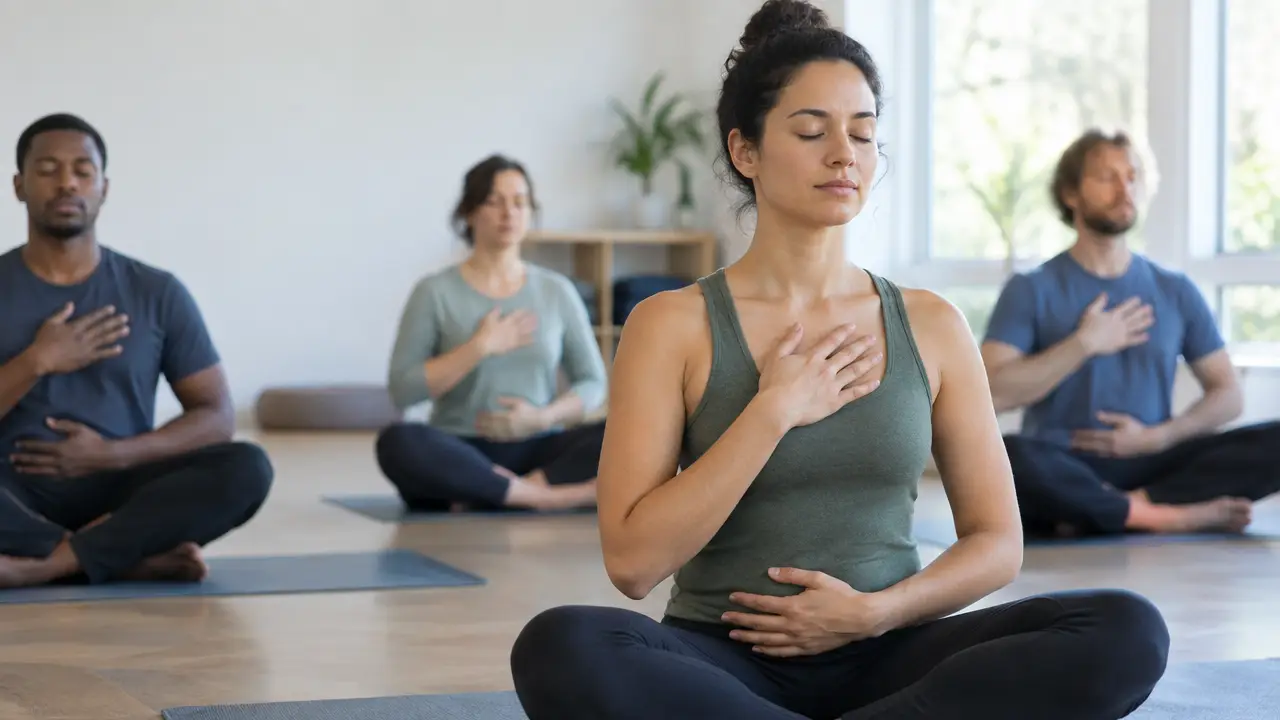
Yoga in Western popular culture is often understood primarily as a physical practice — stretching, strength, flexibility. This understanding misses both what yoga is and why it has particular relevance to addiction recovery. Yoga — particularly in its mind-body integration — addresses dimensions of addiction recovery that talk therapy reaches differently: the body’s stored trauma, the nervous system’s dysregulation, the disconnection from physical experience that substances often produce, and the embodied presence that recovery requires.
This article explores yoga’s specific role in modern addiction treatment, the specific practice of trauma-sensitive yoga, how yoga regulates the nervous system, how to build a daily practice after leaving treatment, and how yoga is integrated at Oceánica.
YOGA’S ROLE IN MODERN TREATMENT
Yoga has moved from the margins to a recognized complementary component of addiction treatment, with a growing evidence base and increasing integration into professional treatment programs.
What the research shows:
Studies of yoga in addiction treatment contexts show improvements in stress and anxiety reduction, improved sleep quality, reduced craving intensity, improved emotional regulation, and enhanced general wellbeing and quality of life in recovery. While the research base is still developing compared to well-established therapies like CBT, the findings are consistently positive.
Yoga’s specific contribution to recovery:
- Nervous system regulation (detailed below) addresses the hyperarousal and dysregulation that underlies many addictions.
- Body awareness — learning to attend to physical sensation — supports the emotional awareness that therapy cultivates.
- Breath practices (pranayama) provide immediate, accessible tools for managing anxiety, craving states, and distress — complementing the cognitive skills of CBT.
- The practice of returning attention to the present moment in yoga is the practical application of mindfulness, which has strong evidence in relapse prevention.
- The experience of the body as a source of strength, ease, and capability counters the relationship with the body that addiction often produces — one of neglect, instrumentalization for pleasure, or shame.
TRAUMA-SENSITIVE YOGA
Standard yoga classes are not always appropriate for people with trauma histories — and given the very high rates of trauma among people in addiction treatment, trauma-sensitive yoga is the relevant approach in this context.
Trauma-sensitive yoga (TSY) was developed by trauma specialist Bessel van der Kolk and colleagues at the Trauma Center in Boston and is based on the understanding that trauma is stored in the body and requires body-based approaches for healing. It adapts standard yoga practices for people with trauma histories in specific ways.
What makes yoga trauma-sensitive:
Language of invitation, not instruction. In trauma-sensitive yoga, all movement suggestions are invitations: “You might consider moving your arm…” rather than commands. This restores agency and choice — the opposite of the helplessness that trauma often involves.
No hands-on adjustments without explicit consent. Physical adjustment by the teacher without consent can be triggering for trauma survivors. TSY removes this.
Attention to internal experience, not appearance. The focus is on what the participant notices internally — sensation, breath, the quality of their own experience — not on how the pose looks or how closely it matches an ideal form. This supports the internal attentiveness that healing requires.
Making the environment predictable and safe. Consistent structure, clear explanations of what’s coming next, and a climate of calm and acceptance support the sense of safety that trauma work requires.
Emphasizing choice and control at every point. Options are always offered; participants are always free to do something different or rest. This consistent offering of choice rebuilds the experience of agency.
At Oceánica, yoga practices integrated into the wellness program are guided with attention to trauma sensitivity — recognizing the likelihood that many participants carry trauma histories and that the approach must reflect this.
NERVOUS SYSTEM REGULATION
One of yoga’s most powerful contributions to addiction recovery is its direct effect on the autonomic nervous system — the physiological system whose dysregulation underlies much of the distress that drives substance use.
The autonomic nervous system has two main branches:
- The sympathetic nervous system (SNS): the “fight or flight” response — activation, arousal, threat response.
- The parasympathetic nervous system (PNS): the “rest and digest” response — calm, recovery, regulation.
In people with addiction and trauma histories, the autonomic nervous system is often chronically dysregulated — stuck in excessive sympathetic activation (hyperarousal, anxiety, hypervigilance) or in the freeze/shutdown response. Substances are often used to artificially shift this state — alcohol to dampen hyperarousal, stimulants to counteract the freeze, opioids to induce profound calm.
Yoga specifically engages the parasympathetic nervous system through:
- Slow, extended exhalation. The exhale activates the vagus nerve, which stimulates parasympathetic response. Lengthening the exhale relative to the inhale is one of the most direct ways to activate the calming branch of the nervous system.
- Slow, sustained movement with attention to breath. The specific combination of mindful movement and breath used in yoga produces measurable parasympathetic activation.
- Interoception — the practice of attending to internal sensation. This attention strengthens the capacity to recognize and tolerate internal states rather than immediately escaping them.
As people develop the ability to shift their own nervous system state through yoga and breathwork, they develop a non-pharmacological tool for the very state regulation that substances were providing — a genuine, healthy alternative.
DAILY PRACTICE BEYOND REHAB
One of the most valuable dimensions of yoga in addiction treatment is that it provides a practice — something the person can continue independently after leaving treatment. This continuity distinguishes yoga from many treatment components that are available only within the treatment setting.
Building a daily yoga practice after rehab:
Start small and sustainable. Five to ten minutes daily is more valuable than a ninety-minute weekly practice that doesn’t continue. Consistency matters more than duration in establishing a practice.
Online resources. High-quality, free yoga instruction is widely available — YouTube channels, apps like Down Dog or Insight Timer — making continued practice accessible regardless of location or financial resources.
Breath practice as an anchor. Even on days when a full practice doesn’t happen, a few minutes of conscious breathwork — particularly extended exhale practices for nervous system regulation — maintains the physiological dimension of the practice.
Integration with meditation. Yoga and meditation naturally complement each other; practitioners often find that yoga leads naturally into seated meditation, creating a combined mind-body practice.
Community practice. Local yoga studios, community classes, and recovery-specific yoga programs (some recovery organizations offer yoga as part of their programming) provide community alongside the practice.
YOGA AT OCEÁNICA
At Oceánica, yoga is available as a component of the wellness program — offered through facilitated practices led by the wellness team and available for self-directed practice during appropriate program times.
What this means practically:
- Facilitated yoga sessions are offered regularly throughout the program, adapted for participants at different levels of physical fitness and flexibility.
- All facilitated yoga at Oceánica is approached with trauma sensitivity — invitational language, no unwanted physical contact, consistent emphasis on choice and individual experience.
- The gym, outdoor spaces, and pool area provide physical environments suitable for self-directed yoga practice during free time.
- Clinical staff can discuss yoga’s role in an individual patient’s recovery and support the development of a post-discharge practice routine.
Yoga at Oceánica is one element of a wellness program that also includes the gym, pool, volleyball, soccer, temazcal, and the structured daily clinical program. It is not the centerpiece of treatment — the clinical core is — but it is a genuinely valuable complement.
FREQUENTLY ASKED QUESTIONS
Does yoga actually help with addiction recovery?
Research shows consistent improvements in stress and anxiety reduction, sleep quality, craving management, and emotional regulation with yoga in addiction treatment contexts. The nervous system regulation dimension — yoga’s direct activation of the parasympathetic nervous system — is particularly relevant to recovery.
What is trauma-sensitive yoga?
A specific approach to yoga adapted for people with trauma histories, developed at the Trauma Center by Bessel van der Kolk and colleagues. Key features: language of invitation (not instruction), no unwanted physical touch, focus on internal experience (not appearance), consistent emphasis on choice and control, and a climate of calm and safety.
How does yoga affect the nervous system?
Slow movement, extended exhalation, and interoception (attention to internal sensation) directly activate the parasympathetic nervous system — shifting the body from hyperarousal toward calm and regulation. This provides a non-pharmacological tool for the nervous system state regulation that substances were artificially providing.
What if I’ve never done yoga before?
No prior experience is needed. Facilitated yoga at Oceánica is accessible to complete beginners, with all practices adapted to individual capacity. Starting with very simple, accessible practices and building gradually is appropriate.
Recommended Reading
- Wellness Activities in Rehab: Beyond Therapy Hours
- Holistic Rehab in Mexico: Healing Mind, Body, and Spirit
- Meditation for Addiction Recovery: Building the Pause
- Services and Programs at Oceánica
EXTERNAL REFERENCE LINKS
- Trauma Center Trauma Sensitive Yoga
- NIDA — Complementary and Integrative Health in Addiction
- SAMHSA — Wellness in Recovery
- Oceánica Conecta
Oceánica is a CARF-accredited residential treatment center in Mazatlán, Mexico, where yoga is offered as a trauma-sensitive component of the wellness program. This article is informational and not medical advice. Call (213) 527-3377 or visit oceanica-usa.com.