
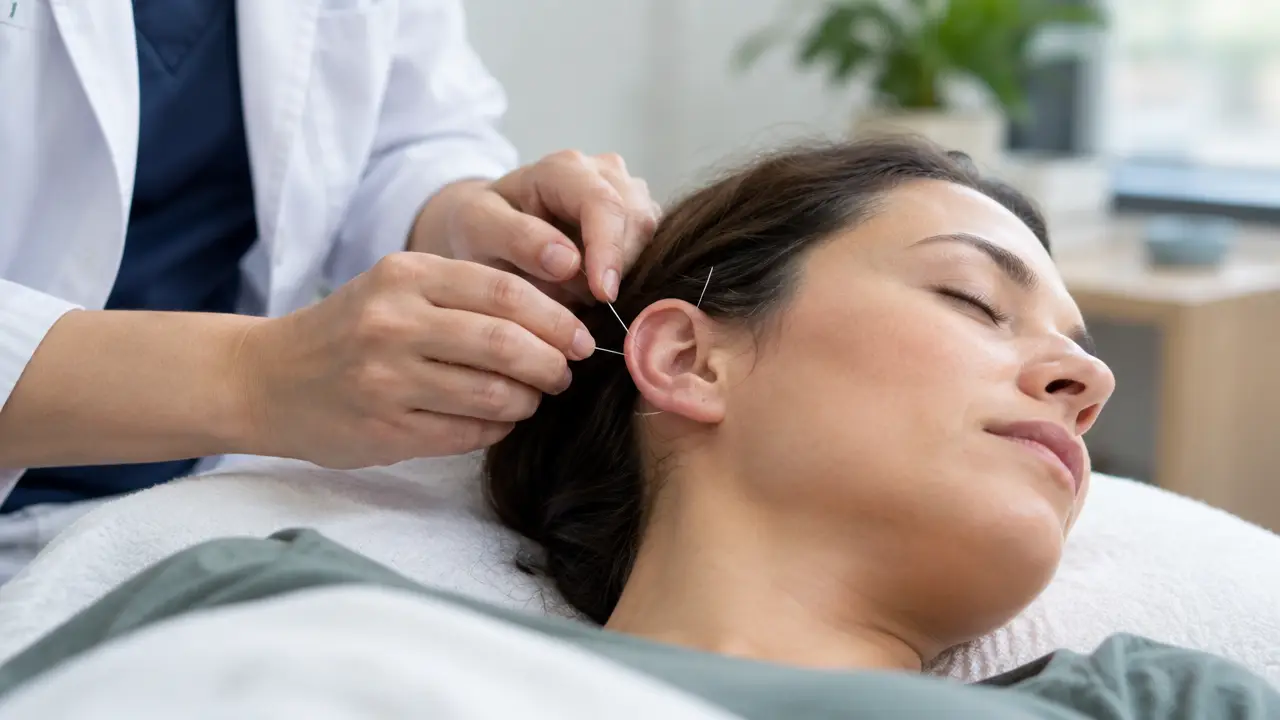
Acupuncture has become a common fixture in upscale rehab program marketing — often listed alongside yoga, meditation, and swimming as a feature of “holistic” care. Whether the evidence supports this prominence is a fair and important question. The answer, based on current research, is nuanced: acupuncture has a mixed and limited evidence base for addiction treatment specifically, though there is one particular application — the NADA protocol — with some support.
This article presents an honest, evidence-based assessment of acupuncture in rehab, distinguishes the NADA protocol from general acupuncture, identifies where genuine benefit may appear, explains what Oceánica uses instead, and suggests how individuals might incorporate acupuncture if it’s personally meaningful to them.
ACUPUNCTURE’S MIXED EVIDENCE BASE
Acupuncture is among the most studied forms of traditional and alternative medicine, with a large research literature. For addiction treatment specifically, the picture is mixed.
What systematic reviews show:
Multiple systematic reviews and meta-analyses of acupuncture in addiction treatment have found:
- Some positive effects on anxiety, craving, and withdrawal symptoms in some studies.
- Significant heterogeneity in study design, acupuncture protocols, and outcome measures — making definitive conclusions difficult.
- Many studies with methodological limitations (small samples, lack of adequate control conditions, short follow-up periods).
- Effect sizes that are often small and inconsistent across studies.
- No consistent evidence that acupuncture improves long-term sobriety rates compared to control conditions.
The Cochrane Collaboration (the gold standard for systematic evidence review) has reviewed acupuncture for specific addiction applications and generally found insufficient evidence to draw firm conclusions about effectiveness, while noting that the research landscape is improving.
This does not mean acupuncture is useless — it means the evidence base is not strong enough to support treating it as a core, evidence-based component of addiction treatment in the way CBT, MAT, and group therapy are supported.
THE NADA PROTOCOL SPECIFICALLY
What NADA is:
NADA uses five specific acupuncture points in the ear (auricular acupuncture), typically applied bilaterally (both ears), in a group setting. It has been used in addiction treatment settings for several decades and has developed a specific institutional presence in the substance use treatment field.
What the evidence shows for NADA:
- NADA has more research specifically in addiction contexts than general body acupuncture.
- Studies suggest potential benefits for: reduced anxiety and agitation during detox, improved sleep, reduced craving for some substances, improved engagement with treatment.
- The group format allows multiple patients to receive the protocol simultaneously, making it more practically feasible in residential settings.
- However, even for NADA, the evidence remains inconsistent and the research quality variable. High-quality randomized controlled trials remain limited.
Where NADA appears most supported:
- As a complement to (not replacement for) evidence-based addiction treatment.
- For managing anxiety and agitation in the early detox period.
- In settings where patients are receptive and the protocol is facilitated correctly.
The NADA Association provides training and certification for practitioners.
WHERE REAL BENEFIT APPEARS
Setting aside the evidence debate, where do practitioners and patients most commonly report genuine benefit from acupuncture in addiction treatment?
Anxiety and stress reduction. The most consistent subjective reports relate to reduced anxiety and a sense of calm. This is consistent with some of the physiological mechanisms proposed for acupuncture — effects on the autonomic nervous system, endorphin release, and cortisol regulation.
Sleep support. Some patients report improved sleep following acupuncture sessions — relevant to the sleep disruption of early recovery.
Sense of wellbeing and groundedness. The acupuncture experience itself — the focused attention, the quiet space, the physical relaxation — may provide therapeutic benefit independent of any specific needle mechanism.
Craving reduction in the short term. Some studies suggest short-term reduction in craving intensity following acupuncture sessions, though the durability of this effect is unclear.
Engagement and acceptability. Some patients who are ambivalent about standard treatments find acupuncture more accessible, and the positive experience may support broader engagement with the treatment program.
These benefits, where they occur, are real and meaningful — while still being modest in scope and not sufficient to position acupuncture as a core evidence-based treatment.
WHAT OCEÁNICA USES INSTEAD
Oceánica does not currently offer acupuncture as part of its program. What the program provides to achieve the same goals — anxiety reduction, relaxation, somatic wellbeing — with a stronger evidence base:
Individual therapy (twice weekly). The anxiety and emotional distress that acupuncture aims to address are most directly treated through evidence-based psychotherapy.
Group therapy (five times weekly). Peer connection, shared processing, and the community of recovery address the anxiety and isolation that often drive substance use more comprehensively than acupuncture.
Temazcal. Oceánica’s temazcal ceremony provides a somatic, heat-based experience with elements of focused attention, community, and embodied release — achieving some of the same somatic and parasympathetic effects that acupuncture proponents cite.
Yoga and breathwork. Evidence-supported for parasympathetic nervous system activation, anxiety reduction, and somatic wellbeing.
Exercise. Strong evidence base for anxiety reduction, mood improvement, and stress regulation.
Mindfulness practices. Evidence-based for anxiety reduction, stress regulation, and direct relevance to craving management.
Medical management. For anxiety that is clinically significant, the medical team can assess and address it with appropriate, evidence-based pharmacological and non-pharmacological approaches.
WHEN YOU MIGHT ADD IT YOURSELF
For patients who have found acupuncture personally beneficial and meaningful, there is no clinical reason to avoid it — particularly after completing the residential program.
How individuals might incorporate acupuncture:
- As a complement to outpatient therapy and the core elements of recovery (not as a substitute).
- When seeking specific support for anxiety or sleep in the post-treatment period.
- With a licensed acupuncturist (L.Ac.) who has experience working with people in recovery.
- In NADA-trained settings, particularly if the group format and specific protocol appeal.
The absence of acupuncture at Oceánica doesn’t prevent patients from incorporating it in their aftercare period if it’s personally meaningful and accessible in their home community.
FREQUENTLY ASKED QUESTIONS
Is acupuncture effective for addiction treatment?
The evidence is mixed and limited. Some studies show positive effects on anxiety, sleep, and short-term craving reduction. Systematic reviews find inconsistent evidence and methodological limitations. Acupuncture is best understood as a potentially useful complement to evidence-based care, not a core treatment.
What is the NADA protocol?
A specific five-point auricular (ear) acupuncture protocol used in addiction treatment settings, developed by the National Acupuncture Detoxification Association. It has more addiction-specific research than general acupuncture and some evidence for reducing anxiety, improving sleep, and supporting treatment engagement during detox.
Does Oceánica offer acupuncture?
No. Oceánica does not currently offer acupuncture. The program achieves comparable goals through temazcal, yoga, mindfulness, exercise, and evidence-based clinical care.
Can I add acupuncture to my recovery after leaving Oceánica?
Yes. If acupuncture is personally meaningful and you’ve found it helpful, there’s no clinical reason to avoid incorporating it as a complement to your recovery program — with a licensed practitioner experienced in working with people in recovery.
Recommended Reading
- Holistic Rehab in Mexico: Healing Mind, Body, and Spirit
- Wellness Activities in Rehab: Beyond Therapy Hours
- Temazcal in Recovery: The Sacred Sweat Lodge
- Services and Programs at Oceánica
EXTERNAL REFERENCE LINKS
- National Acupuncture Detoxification Association (NADA)
- NIDA — Complementary and Alternative Medicine
- SAMHSA — Evidence-Based Practices
- Oceánica Conecta
Oceánica is a CARF-accredited residential treatment center in Mazatlán, Mexico. Acupuncture is not currently offered at Oceánica. This article is informational and not medical advice. Call (213) 527-3377 or visit oceanica-usa.com.