
IMPORTANT DISCLAIMER: This article is for informational purposes only and is not medical or nutritional advice. Individual nutritional needs in recovery should be assessed by qualified healthcare professionals.
Active addiction does profound damage to the body — and a significant part of that damage is nutritional. Most people entering recovery are in a state of nutritional deficiency or imbalance that directly affects their mood, energy, cognitive function, and the experience of early recovery. Addressing nutrition is not a supplementary concern — it is part of healing the physical foundation that psychological recovery depends on.
This article covers the specific nutritional deficiencies that active addiction produces, the importance of gut health, the relationship between blood sugar and cravings, the foods that support mood and neurological recovery, and what Oceánica provides in this dimension.
NUTRITIONAL DEFICIENCIES IN ACTIVE ADDICTION
Different substances deplete different nutrients through different mechanisms — whether through the substance’s direct effects, through the lifestyle of active addiction (poor diet, disrupted eating), or through impaired nutrient absorption.
Alcohol and nutritional depletion:
Alcohol use disorder produces some of the most severe nutritional deficiencies of any addiction. Key deficiencies include:
- Thiamine (Vitamin B1). Severe thiamine deficiency from chronic alcohol use can cause Wernicke-Korsakoff syndrome — a neurological emergency. Thiamine supplementation is standard medical care in alcohol withdrawal.
- Folate (B9) and B12. Essential for neurological function and red blood cell production; commonly deficient in heavy drinkers.
- Vitamin C, zinc, and magnesium. Depleted by alcohol’s diuretic effects and poor dietary habits.
- Protein malnutrition. Many heavy drinkers derive a significant proportion of calories from alcohol with inadequate protein intake.
Opioids and nutrition:
Opioid use is associated with constipation, poor gut motility, and disrupted appetite — leading to irregular, often poor nutrition during active use. The lifestyle of opioid dependence frequently involves disrupted sleep, activity, and eating.
Stimulants and nutrition:
Stimulants (cocaine, meth, Adderall) suppress appetite significantly, leading to weight loss, inadequate caloric intake, and micronutrient deficiencies. People emerging from stimulant addiction often experience sudden return of intense appetite (“rebound eating”) as a withdrawal feature.
All substances:
Across substances, the common nutritional picture is one of inadequate macronutrient intake, micronutrient deficiency, disrupted eating patterns, and in many cases significant weight loss or (in some cases, particularly with alcohol) inappropriate weight distribution alongside nutritional deficiency.
RESTORING GUT HEALTH
The gut-brain connection — the bidirectional communication between the gastrointestinal system and the brain — is one of the more exciting areas of neuroscience and has direct relevance to recovery.
The gut microbiome (the community of microorganisms living in the digestive tract) plays a significant role in:
- Mood regulation. The gut produces a substantial proportion of the body’s serotonin. Gut microbiome health directly affects serotonin production and thus mood.
- Neurological signaling. The vagus nerve provides direct communication between the gut and the brain, meaning gut health affects brain function in ways that are increasingly understood.
- Immune function. A large portion of the immune system is in the gut; chronic substance use disrupts gut microbiome and immune function.
- Absorption of nutrients. A disrupted gut environment impairs nutrient absorption, meaning even adequate food intake doesn’t translate to adequate nutritional support.
Alcohol specifically disrupts the gut microbiome significantly, contributing to “leaky gut” (increased intestinal permeability) and systemic inflammation.
Foods that support gut restoration:
- Fermented foods (yogurt, kefir, sauerkraut, kimchi) containing live beneficial bacteria.
- High-fiber foods (vegetables, legumes, whole grains) that feed beneficial gut bacteria.
- Prebiotic foods (garlic, onion, banana, oats) that specifically nourish beneficial microbiota.
- Bone broth, which contains collagen and gelatin that support gut lining integrity.
- Reduced processed food, sugar, and alcohol — all of which harm gut microbiome diversity.
BLOOD SUGAR & CRAVINGS
One of the most practically important nutritional dimensions of early recovery is blood sugar regulation — and its direct connection to cravings.
The connection between blood sugar and cravings:
- Many substances affect blood sugar. Alcohol causes initial blood sugar rise followed by a drop (hypoglycemia), which produces shakiness, anxiety, and craving — a cycle that directly drives continued drinking.
- Low blood sugar produces irritability, difficulty concentrating, anxiety, and impaired judgment — states that increase vulnerability to relapse.
- The brain in early recovery is particularly sensitive to blood sugar fluctuations because the dopamine system’s disruption means normal pleasure responses are impaired — and the brain may interpret blood sugar drops as signals to seek reward.
Many people in early recovery from alcohol use disorder discover that sugar cravings intensify significantly — the brain’s reward system seeks glucose as a substitute for the rapid blood sugar and reward stimulation that alcohol provided. While some temporary increase in sugar consumption is common in early recovery, stabilizing blood sugar through dietary habits is clinically important.
Nutritional strategies for blood sugar stability:
- Regular meals and snacks. Not allowing long gaps between eating prevents the blood sugar dips that increase craving vulnerability. Eating every 3-4 hours maintains more stable glucose.
- Protein at each meal. Protein slows glucose absorption and reduces blood sugar spikes and drops.
- Complex carbohydrates over simple sugars. Whole grains, vegetables, and legumes produce slower, more stable glucose release than refined sugars and processed foods.
- Limiting caffeine on an empty stomach. Caffeine on an empty stomach can stimulate cortisol and affect blood sugar in ways that increase anxiety and cravings.
FOODS THAT SUPPORT MOOD
Nutrition directly affects neurochemistry — the mood-regulating neurotransmitters that addiction disrupts are built from dietary precursors. Specific foods support mood recovery.
For serotonin production:
Serotonin is synthesized from tryptophan (an amino acid). Foods containing tryptophan: turkey, chicken, eggs, dairy, legumes, nuts and seeds, oats. Tryptophan absorption is improved in the presence of carbohydrates — which may explain the mood-lifting effect of some carbohydrate-containing foods.
For dopamine production:
Dopamine is synthesized from tyrosine and phenylalanine (amino acids found in protein-rich foods): meat, fish, dairy, eggs, legumes, nuts. Omega-3 fatty acids (in fatty fish, walnuts, flaxseed) support dopamine receptor function — particularly relevant to recovery from stimulant and alcohol use, which damages dopamine system function.
For GABA support:
GABA (the calming neurotransmitter that benzodiazepines and alcohol act on) is supported by: complex carbohydrates, fermented foods, green tea (which contains L-theanine, a GABA precursor). Magnesium — depleted by alcohol — is also important for GABA function.
Anti-inflammatory foods:
Chronic inflammation (associated with addiction, depression, and stress) is reduced by: fatty fish, olive oil, berries, leafy green vegetables, turmeric, walnuts.
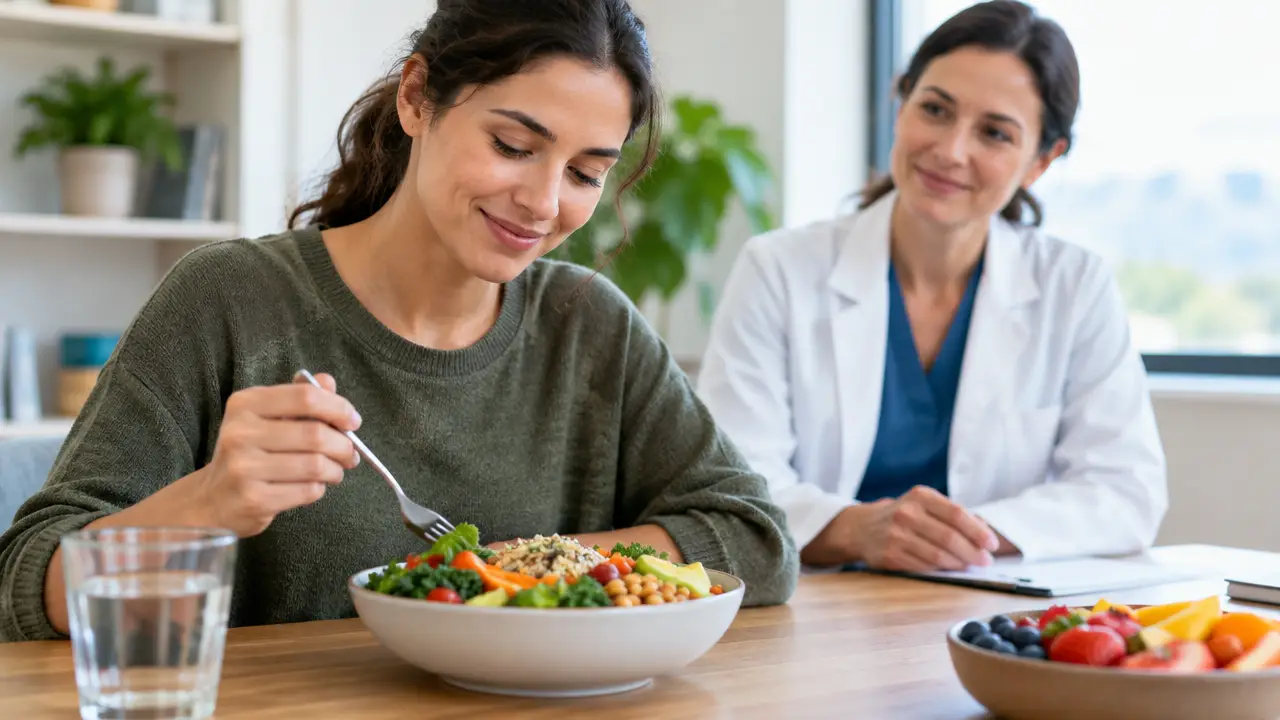
The overall dietary pattern that most supports recovery is a whole-food diet rich in vegetables, lean protein, complex carbohydrates, and healthy fats — with minimal processed food, refined sugar, and caffeine — along with adequate hydration.
NUTRITION AT OCEÁNICA
At Oceánica, meals are provided as part of the residential program, and the clinical team supports patients in establishing healthy eating patterns during the treatment period.
While Oceánica does not currently offer formal nutritional counseling as a structured program component, the residential program provides:
- Regular, consistent mealtimes that establish the eating rhythm that blood sugar stability requires.
- Food that supports nutritional recovery as part of residential meal provision.
- Medical assessment on admission that identifies significant nutritional deficiencies, with appropriate supplementation as indicated — all managed by the qualified medical team.
- Clinical team guidance on nutrition questions relevant to individual patient situations.
Patients with specific dietary requirements (diabetes management, food allergies, religious dietary needs) are encouraged to discuss these with the admissions and clinical team before arrival.
FREQUENTLY ASKED QUESTIONS
Why does active addiction cause nutritional deficiencies?
Through multiple mechanisms: substances directly deplete specific nutrients (alcohol depletes thiamine, B vitamins, magnesium); poor dietary habits during active use; impaired nutrient absorption from gut disruption; appetite suppression (stimulants); and excessive caloric intake from alcohol with inadequate food intake.
What is the gut-brain connection and why does it matter for recovery?
The gut microbiome — the community of microorganisms in the digestive tract — significantly affects mood, neurological function, and immune response through direct neurological connections (the vagus nerve) and through serotonin production in the gut. Addiction disrupts gut health; restoring it supports mood and neurological recovery.
Why do people crave sugar in early recovery from alcohol?
Because alcohol causes blood sugar spikes and drops that the brain learns to associate with relief, and because the disrupted dopamine reward system in early recovery seeks substitute reward sources. The brain may interpret blood sugar drops as signals to seek reward, driving sugar cravings. Stable blood sugar through regular eating and protein intake helps manage this.
What foods best support mood in addiction recovery?
Protein-rich foods (for serotonin and dopamine precursors), complex carbohydrates (for stable blood sugar and serotonin support), omega-3 fatty acids (for dopamine receptor function and anti-inflammatory effects), fermented foods (for gut health and serotonin production), and anti-inflammatory whole foods generally.
Recommended Reading
- Wellness Activities in Rehab: Beyond Therapy Hours
- Holistic Rehab in Mexico: Healing Mind, Body, and Spirit
- Sleep and Recovery: Why Rest Is Treatment
- Services and Programs at Oceánica
EXTERNAL REFERENCE LINKS
- NIDA — Nutrition and Addiction
- NIMH — Brain and Nutrition
- SAMHSA — Wellness in Recovery
- Oceánica Conecta
Oceánica is a CARF-accredited residential treatment center in Mazatlán, Mexico. This article is informational and not medical or nutritional advice. Nutritional needs in recovery should be assessed by qualified professionals. Call (213) 527-3377 or visit oceanica-usa.com.