
The phrase “geographic cure” has a specific meaning in recovery culture — and it isn’t flattering. It refers to the failed strategy of moving to a new city or traveling somewhere new to escape an addiction, as if the problem resided in the geography rather than the person. The geographic cure, as an attempt to escape rather than address addiction, doesn’t work. The person takes themselves with them.
But this reasonable critique of escape-as-cure misses an important clinical truth: the environment does matter to recovery, and strategic geographic change — particularly for the purpose of entering structured treatment in a different environment — is not the same thing as the geographic cure. Travel for treatment is genuinely different from travel as avoidance.
WHY ENVIRONMENT AFFECTS RECOVERY
The environment’s influence on substance use is not merely anecdotal — it’s neurobiological and well-documented. One of the most striking demonstrations comes from the aftermath of the Vietnam War: a large proportion of American soldiers who developed significant heroin use in Vietnam did not continue using after returning home. The environmental cues associated with use — the sights, sounds, smells, and social contexts of Vietnam — did not transfer to the U.S. home environment.
What this reveals is that addiction’s conditioning is deeply environmental: the environmental cues present during use become themselves triggers for craving and use, through classical conditioning. The home, the specific rooms, the neighborhood, the social contacts, the routes driven — all of these become conditioned stimuli that trigger the conditioned response of craving.
Removing a person from these environmental cues — through residential treatment in a different environment — provides the neurological breathing room for:
- The conditioned responses to those cues to weaken (without reinforcement, conditioned responses extinguish over time).
- Therapeutic work to proceed without constant environmental trigger interference.
- New behaviors and neural pathways to be established before re-exposure to the original environment.
This is not a permanent cure — the person will eventually return to environments containing those cues, and relapse prevention work prepares for that. But the initial period of treatment in a distinctly different environment provides advantages that treatment in the original environment cannot.
THE GEOGRAPHIC CURE MYTH VS REALITY
Understanding the distinction between the “geographic cure” (problematic) and strategic environmental change for treatment (clinically supported) is important.
The geographic cure (problematic):
- Moving to a new city or traveling without structured treatment to “leave the addiction behind.”
- No clinical support, therapy, or treatment — just a new location.
- The addiction, the psychological patterns, and the underlying conditions all travel with the person.
- Without treatment, the new environment eventually develops its own using patterns and cues.
- The literature is clear: this doesn’t produce lasting recovery.
Strategic environmental change for treatment (clinically supported):
- Entering a residential treatment program in a different environment — removing from the original cue environment while receiving intensive clinical care.
- The new environment is a therapeutic container, not just a different backdrop.
- The distance from the original environment is one component of a comprehensive treatment approach, not a substitute for one.
- The goal is not to permanently relocate but to use the temporary environmental change for therapeutic effect while building the skills to return home.
- This is precisely what residential treatment in Mexico at Oceánica provides for U.S. patients.
The research on residential treatment outcomes doesn’t show that the geographic distance is the active ingredient — the active ingredients are the therapeutic interventions, the intensity of care, and the removal from triggering environments. The geographic dimension supports these; it doesn’t replace them.
WHEN TRAVEL HELPS
Strategic travel for treatment helps recovery specifically when:
The home environment is saturated with triggers. For people living with using partners, in neighborhoods with dense drug availability, in households containing substances, or in environments with extensive use-associated memories and cues — physical removal during initial treatment provides a significant advantage.
Privacy is important. For executives, professionals, or others for whom local treatment would be known within their professional or social circles, treatment at a distance provides privacy that locally accessible treatment cannot. Mexico’s distance from U.S. professional contexts makes Oceánica an option for people who genuinely cannot access local treatment without significant personal or professional consequences.
Family dynamics need separation. Sometimes the family environment itself — its patterns, dynamics, and the enabling behaviors of family members — is one of the maintaining factors for addiction. A period of treatment away from these dynamics allows initial work to proceed before returning to address the family system.
A complete break is clinically indicated. For severe addiction, treatment that is too close to the original using environment — where the person might be able to leave and return to familiar territory — is less contained and potentially less safe than residential treatment with genuine distance.
Cost is a consideration. U.S. residential treatment programs of comparable quality and accreditation to Oceánica are significantly more expensive. The cost advantage of high-quality treatment in Mexico makes it the accessible option for many people who cannot afford U.S. residential care.
WHEN IT HURTS
Travel for treatment is not appropriate for everyone, and being honest about when it doesn’t help matters.
When geographic distance for treatment may be problematic:
Acute psychiatric emergency. If the person has active suicidal ideation requiring immediate intervention, is acutely psychotic, or requires immediate medical stabilization — emergency psychiatric care closer to home and capable of immediate acute intervention is indicated. Oceánica provides residential (not acute emergency) care.
Insufficient support for travel. If the person’s physical condition, level of intoxication at admission, or logistical circumstances make international travel difficult or dangerous — alternative arrangements are appropriate.
When the distance would prevent family involvement that is clinically important. For some patients — particularly adolescents or those whose family is deeply integral to treatment — the geographic barrier to family participation may outweigh the benefits of distance.
When financial stress from travel would itself be a recovery-threatening burden. If the cost of international travel and treatment would create financial stress severe enough to threaten recovery, a less expensive local option might be more appropriate.
STRATEGIC TRAVEL FOR TREATMENT
For many people, the decision to travel to Mexico for treatment at Oceánica is itself a strategic therapeutic choice — one that leverages the benefits of environmental change, privacy, cost, and the specific therapeutic environment of Mazatlán.
What the Mazatlán environment specifically provides:
Geographic distance. International distance from the U.S. home environment — far enough to ensure genuine separation from the original cue environment.
A distinctly different sensory environment. Mazatlán’s Pacific coast climate, its subtropical warmth, its cultural distinctiveness from northern U.S. environments — all contribute to a sensory environment that doesn’t activate the same conditioned responses as the home environment.
Privacy. The international distance provides natural privacy that local treatment cannot.
Sunshine and warmth. Year-round sunlight, outdoor access, and the physical wellbeing that the coastal climate supports — relevant to mood, vitamin D, and the somatic dimension of recovery.
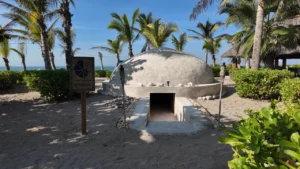
Cultural depth. The temazcal ceremony, the Mexican cultural context, the coastal Pacific environment — experiences with genuine novelty that support the new learning that recovery requires.
Cost effectiveness. Equivalent quality of CARF-accredited residential care at a substantially lower cost than U.S. programs.
FREQUENTLY ASKED QUESTIONS
What is the “geographic cure” and why doesn’t it work?
Moving to a new location without treatment to “escape” addiction. It fails because the addiction, the psychological patterns, and the underlying conditions travel with the person. Without clinical treatment, the new location eventually develops its own using patterns.
Is traveling to Mexico for rehab the same as a geographic cure?
No. The geographic cure involves moving without treatment. Residential treatment in Mexico involves intensive clinical care in a different environment — using the environmental change as one component of comprehensive treatment, not as a substitute for it.
When does treatment at a distance genuinely help recovery?
When the home environment is saturated with addiction-associated cues, when privacy from professional or social circles is important, when family dynamics need temporary separation, when the cost of local treatment is prohibitive, or when a complete break from the original environment is clinically indicated.
What does the Mazatlán environment specifically contribute to recovery?
Geographic distance from the U.S. home cue environment, a distinctly different sensory context, privacy, year-round sunlight, coastal wellness environment, cultural experiences including temazcal, and cost-effective access to CARF-accredited residential care.
Recommended Reading
- Medical Tourism for Rehab in Mexico
- Rehab in Mexico for Americans
- Holistic Rehab in Mexico: Healing Mind, Body, and Spirit
- Services and Programs at Oceánica
EXTERNAL REFERENCE LINKS
- NIDA — Drug Treatment Research
- SAMHSA — Finding Treatment
- Joint Commission International (CARF)
- Oceánica Conecta
Oceánica is a CARF-accredited residential treatment center in Mazatlán, Mexico. This article is informational and not medical advice. Call (213) 527-3377 or visit oceanica-usa.com.