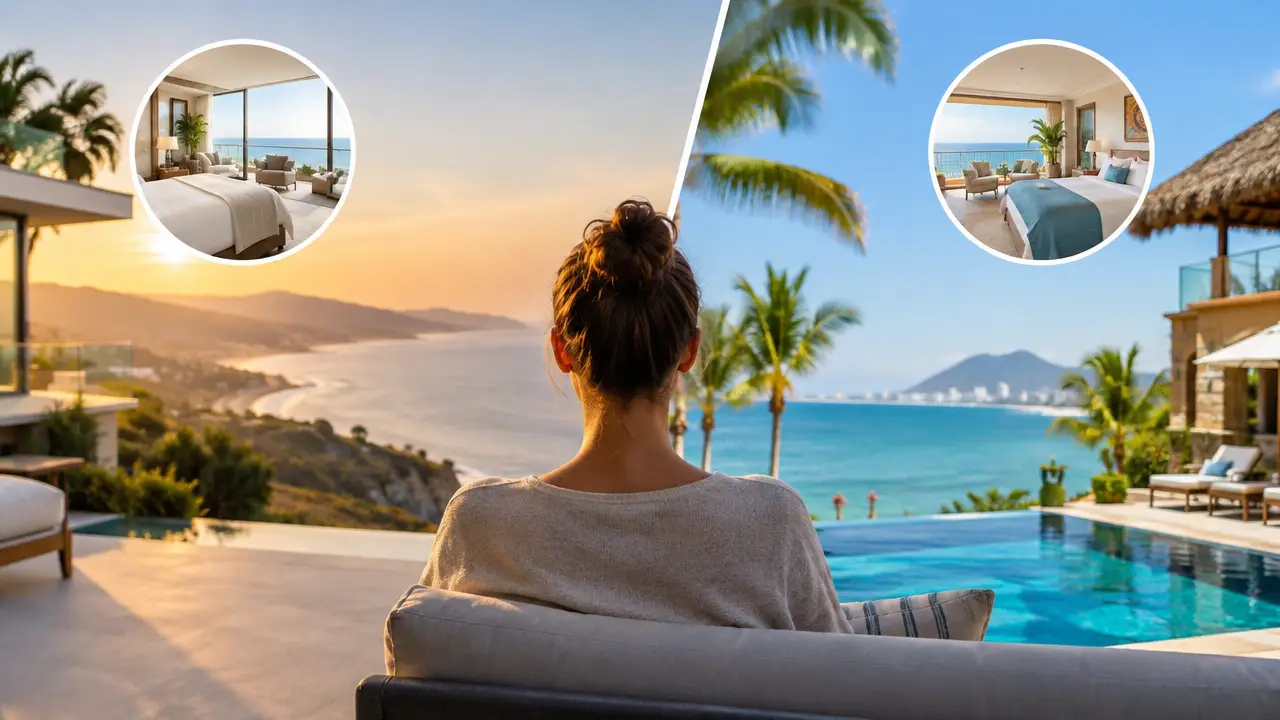
Considering Rehab Mexico vs Malibu. The last one has become synonymous with luxury addiction treatment in American culture. The combination of Pacific Ocean views, canyon retreats, celebrity clientele, and the general aura of Southern California luxury has made Malibu the aspirational address in the residential treatment world. Malibu program pricing reflects this status: typical rates range from $50,000–$120,000 per month, with some programs exceeding this substantially.
This article provides an honest, factual comparison between what Malibu rehabs actually provide at those prices and what Oceánica provides in Mazatlán, Mexico.
WHAT MALIBU REHAB ACTUALLY COSTS
Malibu residential treatment programs are among the most expensive healthcare experiences available in the United States. Understanding what drives these costs is essential for evaluating the comparison.
Typical Malibu pricing:
- Standard quality Malibu residential programs: $40,000–$70,000/month
- Mid-to-upper Malibu programs: $70,000–$120,000/month
- Concierge-level Malibu programs: $100,000–$250,000+/month
Cost drivers specific to Malibu:
Malibu real estate: Malibu is among the most expensive residential real estate markets in the world. Treatment programs occupying oceanfront or canyon properties in Malibu carry real estate costs that are unmatched in most other treatment locations. These costs are embedded directly in program fees.
Celebrity and luxury brand premium: The Malibu address and the association with celebrity clientele commands a significant brand premium — patients pay partly for exclusivity and prestige.
Staffing: California’s high cost of living requires corresponding compensation for clinical and support staff.
Amenities: The chef-prepared meals, fitness amenities, spa services, and other luxury components that define high-end Malibu programs represent genuine costs passed to patients.
WHAT’S INCLUDED AT THAT PRICE
Understanding what Malibu programs provide for $50,000–$120,000/month helps evaluate what the premium actually covers.
Clinical components (common to quality Malibu programs):
- Individual therapy: typically 3-5 sessions weekly
- Group therapy: daily groups
- Psychiatric services
- Medical supervision
- Dual diagnosis treatment
- Evidence-based therapies (CBT, DBT, EMDR)
- Individualized treatment planning
- Aftercare coordination
Non-clinical components (driving much of the cost premium):
- Private rooms or suites with high-end furnishings
- Ocean or canyon views
- Chef-prepared gourmet meals
- Private fitness facilities, yoga, swimming pools
- Spa services (massage, acupuncture, sauna)
- Equine therapy or other premium activities
- Concierge medical and administrative services
- Security and privacy infrastructure
- Lower patient census for privacy
Honest assessment: the clinical core of top Malibu programs is genuinely excellent. But a substantial portion of the cost premium reflects real estate, luxury amenities, and brand positioning — not clinical components that directly improve treatment outcomes. The evidence base for treatment outcomes doesn’t consistently show that gourmet meals or ocean views produce better recovery than good clinical care in a comfortable but less extravagant setting.
OCEÁNICA’S EQUIVALENT INCLUSIONS
What Oceánica provides in Mazatlán, Mexico, at $12,500–$19,100 depending on program length (45 days of treatment):
Clinical components:
- Individual therapy: 2 sessions weekly
- Group therapy: 5 sessions weekly
- Medical supervision throughout residential stay
- Psychiatric services and medication management by qualified physicians
- Dual diagnosis integrated treatment
- Evidence-based approaches (CBT, DBT, EMDR, trauma-focused)
- Individualized treatment planning from admission
- Structured aftercare and discharge planning
- 8:1 therapist-to-patient ratio
- Fully English-speaking clinical team
- CARF accreditation — externally verified quality standard
Facility and wellness components:
- Residential accommodation (standard shared; private room available at additional cost)
- Meals provided throughout the program
- Fully equipped gym
- Swimming pool
- Volleyball court and soccer field
- Temazcal ceremony (voluntary)
- Pacific coast coastal setting with over 300 sunny days annually
- Mazatlán’s warm subtropical climate year-round
What’s not offered (honest transparency):
- Equine therapy, art therapy, acupuncture — not current program features
- Gourmet chef meals in the Malibu sense
- Private suites as a standard (private rooms available for additional fee)
- The Malibu brand and associated celebrity-treatment prestige
CLINICAL QUALITY COMPARED
The most important question: how does the clinical quality compare?
Structural clinical similarities:
Both quality Malibu programs and Oceánica provide evidence-based therapy, individualized treatment planning, dual diagnosis capacity, medical supervision, and structured groups. The therapeutic approaches are comparable. The difference is not primarily clinical — it’s cost, setting, and amenity.
Where Malibu programs may have advantages:
- Higher individual therapy frequency at top programs (3-5 sessions vs Oceánica’s 2)
- Larger multidisciplinary teams with a wider range of on-site specialists
- For patients requiring specific insurance billing, Malibu programs have insurance relationships
- The Malibu setting is beautiful and the amenities are exceptional
Where Oceánica has advantages:
- Cost: $12,500–$19,100 vs $50,000–$120,000 — enabling vastly better-resourced aftercare
- Privacy: international setting far from U.S. professional and celebrity circles
- Geographic separation from the original using environment
- CARF accreditation as independently verified quality assurance
- 30+ years of experience
- Pacific coast climate comparable to Malibu’s
The honest summary: Malibu’s top programs offer more individual therapy and more amenities. Oceánica offers comparable core clinical quality at 10-15% of the cost — enabling the robust aftercare investment that often matters more for long-term outcomes than the difference in individual therapy frequency during residential.
SETTING DIFFERENCES
Malibu setting:
- Pacific Ocean and Santa Monica Mountain canyon views
- Among the world’s most beautiful treatment settings
- Celebrity-adjacent location and culture
- Consistent mild Southern California coastal weather
- Near major metropolitan Los Angeles area
Mazatlán / Oceánica setting:
- Pacific coast subtropical setting at 23°N latitude
- Year-round warmth with over 300 sunny days annually
- Pacific Ocean proximity
- Mexican cultural environment — colonial architecture, temazcal tradition, rich culinary culture
- Authentic international experience distinct from U.S. settings
- Geographic and cultural separation from U.S. professional and social contexts
Both are Pacific coast. Both are warm. Both are beautiful. The differences are cultural — Malibu offers Southern California luxury culture; Mazatlán offers Mexican Pacific coast culture. For many patients, the cultural novelty of Mexico provides a deeper environmental shift that supports recovery.
FREQUENTLY ASKED QUESTIONS
What do Malibu rehabs actually cost?
Typical Malibu programs run $50,000–$120,000 per month, with some concierge programs exceeding $200,000. Costs reflect extraordinary real estate, luxury amenities, California labor costs, and brand premium — in addition to genuine clinical quality.
How does Oceánica compare to Malibu clinically?
Both offer evidence-based therapy, individualized treatment, dual diagnosis capacity, and medical supervision. Malibu’s top programs typically offer more individual therapy sessions weekly. Oceánica is CARF-accredited and provides comparable core clinical quality at 10-15% of Malibu’s cost.
What does Oceánica cost compared to Malibu?
Oceánica’s programs range from $12,500–$19,100 depending on length (45 days of treatment) — compared to $50,000–$120,000 for a comparable Malibu month. The $40,000–$100,000 savings enables exceptional aftercare investment.
Who should choose Malibu over Oceánica?
Patients who specifically value the Malibu prestige setting, the highest individual therapy frequency, on-site insurance billing, a wider range of on-site specialty services, or the ability to have family visit from Southern California with no international travel. For most patients prioritizing clinical quality and long-term outcomes over setting prestige, the cost math strongly favors Oceánica.
Recommended Reading
- Luxury Rehab in Mexico
- Celebrity Rehab in Mexico
- Rehab in Mexico vs USA
- Services and Programs at Oceánica
EXTERNAL REFERENCE LINKS
- CARF International — Accreditation Search
- SAMHSA — Treatment Locator
- NIDA — Principles of Drug Addiction Treatment
- Oceánica Conecta
Oceánica is a CARF-accredited residential treatment center in Mazatlán, Mexico. Programs from $12,500 USD. Oceánica does not bill U.S. insurance directly. A small refundable deposit is collected at admission. Call (213) 527-3377 or visit oceanica-usa.com.