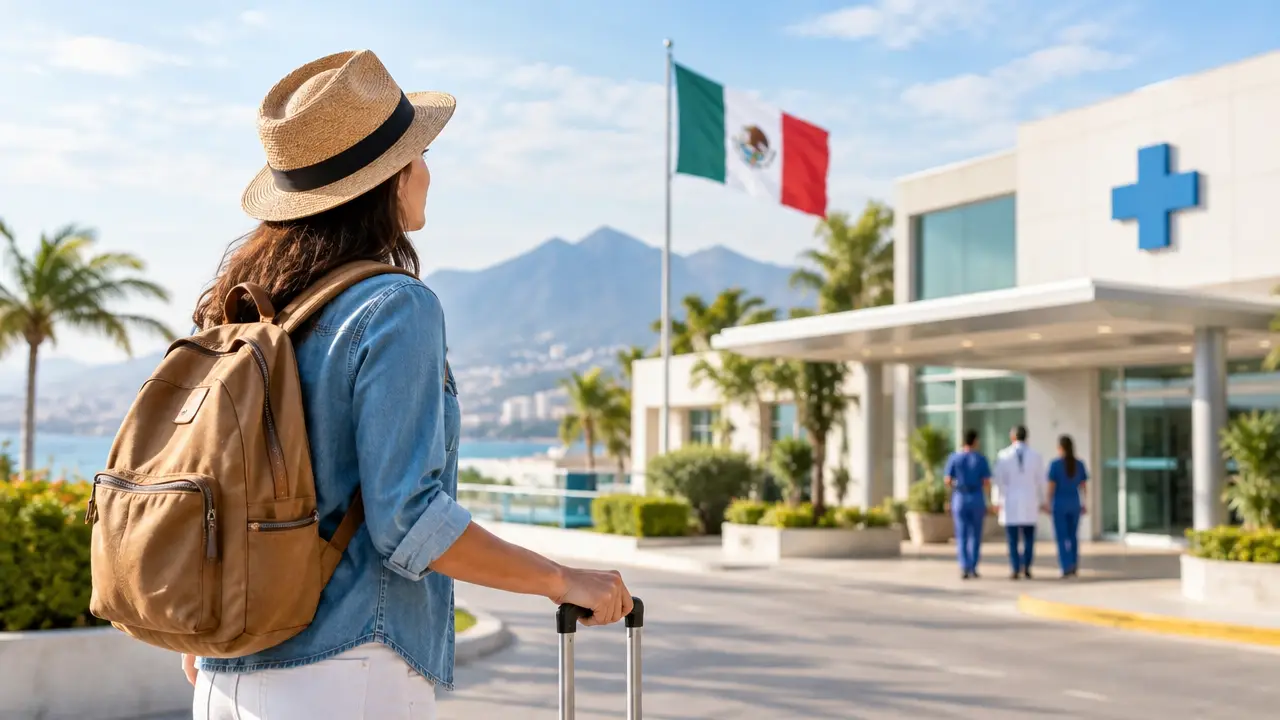
Medical tourism — traveling to another country to receive healthcare — has grown into a multi-billion dollar global industry, and Mexico is one of its most established destinations, particularly for U.S. patients. The combination of geographic proximity, cost advantages, a well-developed medical infrastructure, and a long history of serving international patients has made Mexico the most-visited medical tourism destination for Americans, with millions of U.S. patients traveling south each year for procedures ranging from dental care and bariatric surgery to orthopedic procedures, fertility treatments, and increasingly, addiction and mental health treatment.
This article presents the current landscape of medical tourism to Mexico — the market size, the most common procedures, why U.S. patients choose Mexico, the quality and safety picture, and the trends shaping the industry’s future.
MEDICAL TOURISM MARKET SIZE
Mexico’s medical tourism sector has grown substantially over the past decade, driven by rising U.S. healthcare costs, aging demographics, and increasing consumer awareness of international options.
Key market indicators:
Mexico receives an estimated 1-1.5 million medical tourist visits annually from the United States — making it the number-one destination for U.S. medical tourists by volume. Most estimates place this well above the combined U.S. patient volume for all other international destinations combined.
Mexico’s medical tourism revenue has been estimated in the range of $5-15 billion USD annually, with growth accelerating in recent years as awareness and digital search have made international healthcare easier to research and access.
The U.S.-Mexico healthcare price gap: The U.S. healthcare system is the most expensive in the developed world by virtually every measure. Mexico provides comparable quality for many procedures at 40-80% lower cost — the fundamental driver of all medical tourism from the U.S. to Mexico.
Border city tourism: A substantial proportion of U.S. medical tourists visit border cities — Tijuana, Juárez, Nuevo Laredo, Reynosa — for dental work, prescription medications, and specific procedures. This “drive-over” medical tourism is the highest-volume category.
Interior Mexico and specialty tourism: A growing segment of higher-complexity care — orthopedic surgery, cancer treatment, bariatric surgery, fertility, and behavioral health — is delivered at facilities in interior Mexico cities (Guadalajara, Monterrey, Mexico City, Puerto Vallarta, Mazatlán) serving U.S. patients who fly in for planned treatment.
TOP PROCEDURES BY VOLUME
Medical tourism in Mexico covers a wide range of procedures, with some categories driving the majority of volume:
Dental care:
By far the highest-volume category. Millions of Americans cross the border or travel to Mexican dental clinics annually for routine care, cosmetic dentistry, dental implants, and orthodontics. A dental implant that costs $3,000-5,000 in the U.S. may cost $700-1,500 in Mexico. This category alone represents the largest share of total U.S. patient volume.
Bariatric surgery:
Mexico is the leading destination for U.S. bariatric surgery patients. Gastric sleeve, gastric bypass, and related procedures cost approximately $4,000-8,000 in Mexico compared to $15,000-30,000+ in the U.S. Tijuana, Monterrey, and Puerto Vallarta are major bariatric surgery destinations.
Orthopedic surgery:
Hip replacements, knee replacements, and spinal procedures draw U.S. patients — particularly Medicare patients who face out-of-pocket costs and older Americans with significant orthopedic needs. Costs are typically 60-75% lower in Mexico.
Cosmetic surgery:
Mexico is a leading cosmetic surgery destination, particularly for rhinoplasty, liposuction, breast augmentation, and facelifts. Cancún, Los Cabos, and Guadalajara are prominent cosmetic surgery destinations.
Fertility treatments:
In vitro fertilization and related fertility treatments are substantially less expensive in Mexico and increasingly popular with U.S. patients.
Addiction and behavioral health:
A growing and increasingly sophisticated segment of medical tourism involves behavioral health treatment — addiction treatment, mood disorder treatment, and mental health care in residential settings. This segment has grown as quality accredited programs (including CARF-accredited facilities like Oceánica) have become more visible in U.S. patient search.
WHY U.S. PATIENTS CHOOSE MEXICO
The drivers of U.S. medical tourism to Mexico are well-understood and consistent:
Cost:
The fundamental driver. U.S. healthcare prices are among the highest in the world; Mexico provides comparable quality in many areas at 40-80% lower cost. For uninsured, underinsured, or patients whose insurance doesn’t cover specific procedures, Mexico provides access that the U.S. system doesn’t.
Geographic proximity:
Unlike most international medical tourism destinations (Thailand, India, Central America), Mexico is reachable in hours from most U.S. cities. For patients near the border, Mexico is drive-over accessible.
Quality of care at accredited facilities:
Mexico’s healthcare infrastructure includes many facilities and providers with international training, international accreditation, and clinical quality comparable to U.S. standards. CARF accreditation (for behavioral health), JCI accreditation (for hospitals), and other international quality standards are held by Mexican facilities and are verifiable.
Privacy:
For U.S. patients seeking treatment for stigmatized conditions — addiction, mental health, cosmetic procedures — international treatment offers privacy from professional and social networks that local treatment doesn’t.
Cultural and language access:
Many Mexican healthcare providers serving U.S. patients are bilingual or English-speaking. The relatively familiar cultural context of Mexico — compared to Southeast Asian or Eastern European destinations — makes it more accessible for U.S. patients.
SAFETY & QUALITY INDICATORS
A common concern about medical tourism generally — and Mexico specifically — involves safety and quality of care. The honest picture is more nuanced than either the dismissive “never go there” or the uncritical “it’s all fine” positions.
Quality varies significantly:
As with U.S. healthcare, quality in Mexico varies significantly by facility and provider. A CARF-accredited behavioral health facility in Mazatlán and an unlicensed procedure mill in a border city are not comparable. The quality of Mexican healthcare — like American healthcare — ranges from excellent to poor; the patient’s responsibility is to verify specific facility quality.
International accreditation as quality indicator:
The most reliable quality indicator for specific facilities is international accreditation. For behavioral health (including addiction treatment), CARF accreditation is the relevant standard. For hospitals, JCI (Joint Commission International) accreditation is comparable to U.S. hospital standards. These accreditations are verifiable, inspected, and internationally recognized.
U.S. State Department and safety perspective:
The U.S. State Department issues travel advisories for Mexico that are specific to regions and types of risk. Tourist and medical tourism zones in most major Mexican cities — including Mazatlán — are generally assessed at lower risk levels than the sensationalized media coverage of Mexico’s security situation might suggest. (The Mazatlán safety picture is addressed in detail in the companion article.)
Patient rights:
Mexico has patient rights laws and healthcare regulations; accredited facilities are subject to oversight. The absence of U.S. malpractice litigation doesn’t mean an absence of quality standards at accredited facilities.
FUTURE TRENDS
Several trends are shaping the future of medical tourism to Mexico:
Continued growth in behavioral health:
Addiction treatment, mental health residential care, and psychiatric services represent a growing segment of medical tourism, driven by the crisis of U.S. mental health and addiction care capacity, the cost gap, and the growing visibility of accredited Mexican programs.
Digital search and transparency:
U.S. patients are increasingly able to research specific facilities, read reviews, verify accreditations, and connect with former patients before making decisions. This transparency is improving quality competition in the market and reducing the information asymmetry that previously disadvantaged patients.
Telehealth bridging:
Growing integration between in-person treatment in Mexico and U.S.-based telehealth aftercare creates more seamless care pathways for U.S. patients who complete treatment in Mexico.
Insurance evolution:
Some insurance products are beginning to explicitly cover medical tourism for certain procedures, representing an evolution from the current predominantly out-of-pocket model.
Quality consolidation:
As the market matures, accredited, high-quality facilities are increasingly differentiating themselves from lower-quality operations — consolidating the market around verifiable quality standards.
FREQUENTLY ASKED QUESTIONS
How many Americans travel to Mexico for medical treatment annually?
Estimates range from 1-1.5 million U.S. medical tourist visits annually, making Mexico the top destination by volume for U.S. medical tourism. Mexico’s combination of geographic proximity, cost advantage, and developed healthcare infrastructure drives this volume.
What are the most common procedures for U.S. patients in Mexico?
Dental care (highest volume), bariatric surgery, orthopedic procedures, cosmetic surgery, fertility treatments, and a growing segment of behavioral health and addiction treatment.
How can I verify quality of a specific Mexico healthcare facility?
Seek international accreditation — CARF for behavioral health programs, JCI for hospitals. These accreditations are verifiable through the accrediting body’s website and represent inspected, externally verified quality standards. Program-specific research — speaking with the clinical team, reading reviews, speaking with alumni — supplements accreditation verification.
Is it safe to receive medical care in Mexico?
Safety and quality vary significantly by facility and region. Accredited facilities in established cities with healthcare tourism infrastructure (Mazatlán, Guadalajara, Puerto Vallarta, Monterrey) operate in different risk environments than facilities in high-risk border regions. Accreditation verification and facility-specific research are essential.
Recommended Reading
- Medical Tourism for Rehab in Mexico
- Is Rehab in Mexico Safe?
- Rehab in Mexico Cost
- Services and Programs at Oceánica
EXTERNAL REFERENCE LINKS
- CARF International — Accreditation Search
- JCI — Accredited Organizations
- U.S. State Department — Mexico Travel
- Oceánica Conecta
Oceánica is a CARF-accredited residential treatment center in Mazatlán, Mexico, serving U.S. patients seeking quality addiction and mood disorder treatment at a fraction of U.S. costs. This article is informational and not medical advice. Call (213) 527-3377 or visit oceanica-usa.com.