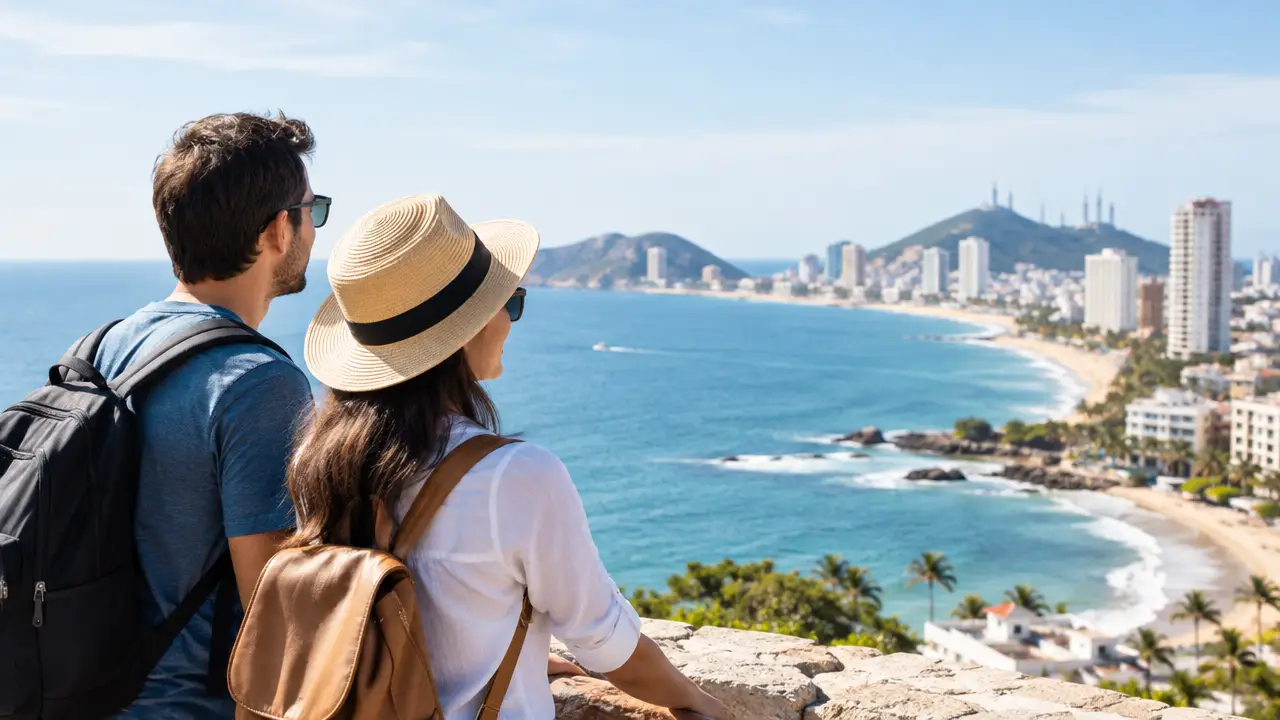
Mazatlan safety for tourists. Travel safety conditions can change. Always check the current U.S. State Department travel advisory at travel.state.gov before travel. This article provides a general overview based on available information as of mid-2026 and is not a real-time safety assessment.
Mexico’s safety reputation in U.S. media is significantly worse than the nuanced reality on the ground, particularly for established tourist destinations. Broad national-level crime statistics about Mexico, and media coverage focused on specific high-risk regions, create an impression of uniform danger that doesn’t accurately describe the safety experience of millions of tourists who visit cities like Mazatlán annually without incident.
This article provides an honest, balanced assessment of Mazatlán’s safety for U.S. visitors — covering the State Department advisory context, the actual tourist zone safety picture, how Mazatlán compares to U.S. cities, and practical safety considerations for patients and families visiting Oceánica.
MAZATLÁN’S SAFETY REPUTATION
Mazatlán is one of Mexico’s most established tourism destinations, with a history of hosting international visitors spanning more than a century. The city’s tourism infrastructure, its Pacific coast appeal, and its proximity to the U.S. (particularly for the western states) have sustained a substantial international tourist presence.
In recent years, Mazatlán has continued to develop its tourism sector — including a major renovation of the Zona Dorada (Golden Zone) tourism corridor and infrastructure investment in the historic district. The presence of major international hotel brands, cruise ship port activity, and a stable base of U.S. expat residents all reflect an environment that has remained viable for international tourism.
The vast majority of U.S. visitors to Mazatlán — for tourism, for dental tourism, for retirees, and for medical treatment — report safe, positive experiences.
CURRENT U.S. STATE DEPARTMENT ADVISORY
The U.S. State Department issues travel advisories for Mexico that are specific to states (not the country as a whole). Understanding the advisory system is important for accurate assessment.
Mexico advisory levels:
The State Department uses a four-level scale:
- Level 1 (Exercise Normal Precautions)
- Level 2 (Exercise Increased Caution)
- Level 3 (Reconsider Travel)
- Level 4 (Do Not Travel)
Sinaloa State advisory context:
Mazatlán is in the state of Sinaloa. Sinaloa has at various points received a Level 3 advisory (Reconsider Travel) due to criminal organization activity in parts of the state — though the advisory has historically differentiated between the tourist zones of Mazatlán and the more affected inland areas of the state.
Important nuances:
State-level advisories cover the entire administrative region and may reflect risk in specific areas (mountain regions, inland communities) that is not representative of the tourist zones.
The advisory specifically notes that U.S. government personnel are permitted to visit the tourist areas of Mazatlán — a meaningful practical indicator of the actual risk assessment for the tourist zone.
Millions of U.S. tourists visit Sinaloa/Mazatlán annually despite the state-level advisory.
Recommendation: Always check the current, specific advisory at travel.state.gov before travel, as advisories are updated periodically.
TOURIST ZONE SAFETY
The distinction between Mazatlán’s tourist zones and other areas is clinically important and reflects the experience of international visitors.
Mazatlán’s key tourist areas:
Zona Dorada (Golden Zone): The primary tourist corridor, lined with hotels, restaurants, shops, and beach access. Well-lit, actively patrolled, and the center of Mazatlán’s international tourism activity.
Malecon (Waterfront): The famous Pacific oceanfront boulevard — one of the longest in Mexico — a popular promenade for residents and tourists, generally considered safe for walking.
Historic District (Centro Histórico): Mazatlán’s beautifully preserved colonial downtown, with restaurants, galleries, and cultural sites. The historic district renovation has increased safety and activity in recent years.
The tourist zone safety experience:
For tourists operating within established tourist zones — hotels, restaurants, beach areas, the Malecon, the historic district — Mazatlán’s safety experience is generally positive. The tourist infrastructure creates a reasonably well-monitored environment.
What to avoid:
The State Department’s standard guidance for Mexico tourist destinations applies: avoid travel outside tourist zones at night, particularly to unfamiliar areas. Avoid displaying expensive items, jewelry, or large amounts of cash. Use officially designated taxis or app-based services rather than unmarked vehicles.
COMPARISON TO U.S. CITIES
A useful context for the Mazatlán safety discussion is comparison to U.S. cities — many of which have homicide and crime rates that exceed Mazatlán’s tourist zone experience.
Homicide rates in context:
U.S. cities including New Orleans, Baltimore, St. Louis, Detroit, and others have homicide rates per 100,000 population that compare unfavorably to Mazatlán’s. The media narrative of Mexico as uniformly dangerous relative to the U.S. doesn’t hold up to direct statistical comparison for many specific destinations.
Tourist-zone vs national averages:
Crime statistics for tourist zones within Mexican cities typically differ substantially from statewide or national averages — just as crime statistics for specific neighborhoods in U.S. cities differ substantially from citywide averages. Tourist infrastructure creates concentrations of police presence, economic activity, and community investment that reduce crime in tourist corridors.
The relevant question for Oceánica patients:
The safety question that matters for Oceánica patients isn’t Mexico’s national crime statistics — it’s the safety experience of international visitors staying in a residential treatment facility in Mazatlán. Oceánica’s 30+ years of serving U.S. patients provides the most directly relevant data point: thousands of U.S. patients have completed treatment at Oceánica without significant safety incidents related to the city environment.
PRACTICAL SAFETY TIPS
For patients and families visiting Mazatlán for treatment or family visits, practical safety practices maximize comfort and security:
Oceánica provides security:
The residential treatment facility itself is a secure environment with appropriate staff presence throughout.
For family visitors:
- Stay at established hotels in the Zona Dorada or historic district.
- Use hotel-recommended transportation or app-based ride services (Uber is available in Mazatlán).
- Avoid walking in unfamiliar areas after dark.
- Be aware of your surroundings as you would in any unfamiliar city.
- Don’t display expensive jewelry, watches, or cameras conspicuously.
Practical logistics:
- ATMs at hotels and major shopping centers are generally safer than street ATMs.
- Use credit cards where accepted to minimize cash carrying.
- Keep a copy of your passport separate from the original.
- Inform someone at home of your itinerary.
- Save Oceánica’s number and local emergency numbers in your phone.
Emergency numbers in Mexico:
- Emergency services (police, fire, ambulance): 911
- Tourist assistance: 078
- U.S. Consulate emergency number for U.S. citizens: Available at the U.S. Embassy Mexico website (travel.state.gov)
FREQUENTLY ASKED QUESTIONS
Is Mazatlán safe for U.S. tourists?
Mazatlán’s tourist zones — the Zona Dorada, the Malecon, and the historic district — are generally considered safe for international tourists who follow standard precautions. Millions of U.S. visitors come annually. The safety experience in tourist areas differs significantly from statistics about broader regional crime.
What is the U.S. State Department advisory for Mazatlán?
Mazatlán is in Sinaloa state. Check travel.state.gov for the current specific advisory, which is updated periodically. The advisory has historically permitted U.S. government employee visits to tourist areas of Mazatlán, reflecting the differential risk assessment between tourist zones and other areas of the state.
How safe is Mazatlán compared to U.S. cities?
Several major U.S. cities have higher homicide rates than Mazatlán’s tourist zone. The media narrative of Mexico as uniformly more dangerous than the U.S. doesn’t hold up to direct comparison for established tourist destinations like Mazatlán.
Are there any specific concerns for Oceánica patients?
Oceánica’s residential facility provides a secure environment throughout the treatment stay. For family visitors staying in Mazatlán’s tourist zone hotels, standard travel precautions — using hotel-recommended transportation, staying in established tourist areas, avoiding unfamiliar areas at night — are appropriate.
Recommended Reading
- Traveling to Mexico for Rehab Safely: Logistics Guide
- Is Rehab in Mexico Safe?
- Flying to Mazatlán from the U.S.
- Services and Programs at Oceánica
EXTERNAL REFERENCE LINKS
- U.S. State Department — Mexico Travel Advisory
- U.S. Embassy Mexico — Emergency Consular Services
- Mazatlán Tourism
- Oceánica Conecta
Oceánica is a CARF-accredited residential treatment center in Mazatlán, Mexico. This article presents a general safety overview; always check current U.S. State Department advisories at travel.state.gov before travel. Call (213) 527-3377 or visit oceanica-usa.com.