
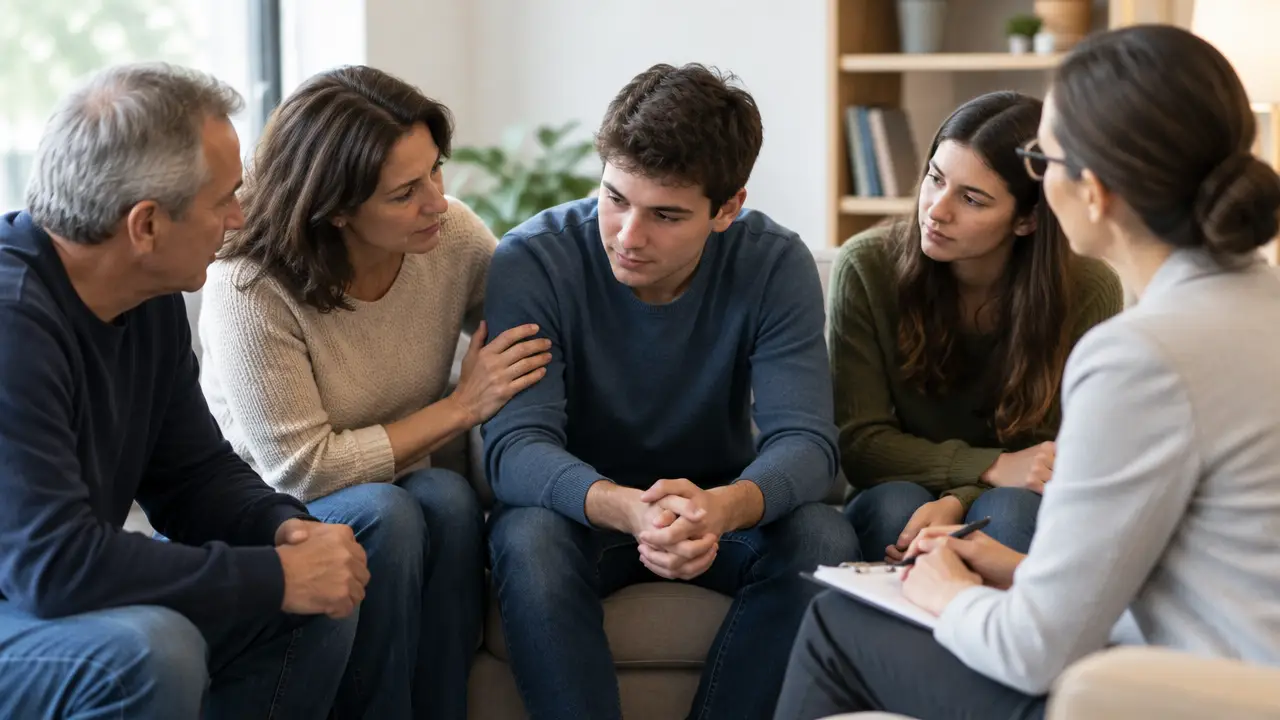
Addiction is often called a “family disease” — not to assign blame to families, but to acknowledge that when one person develops a substance use disorder, the effects ripple through every relationship in the household. Spouses, parents, children, and siblings are all affected: by the chaos and unpredictability of active addiction, by the fear, grief, anger, and helplessness of watching someone they love suffer, and by the changes in family dynamics that addiction forces. Families need their own healing, not just as supporters of their loved one’s recovery, but for themselves.
This article explores how addiction affects whole family systems, the roles family members develop in active addiction, how families heal their own wounds, how to support without enabling, and the family component of treatment at Oceánica.
WHY ADDICTION AFFECTS THE WHOLE FAMILY
The impact of addiction on families is not peripheral — it is central to the experience. Living with or loving someone in active addiction produces specific, well-documented effects:
- Chronic stress and hypervigilance. Family members learn to monitor the person’s behavior constantly — looking for signs of use, anticipating crises, managing consequences. This chronic state of alertness takes a significant physiological and psychological toll, similar to living in an environment of ongoing unpredictable threat.
- Grief without death. Families often describe watching a loved one’s addiction as a kind of grief — mourning the person they knew while that person is still present. The relationship changes, trust erodes, and the person seems both present and lost.
- Walking on eggshells. The unpredictability of active addiction — when will they use today? What mood will they be in? Will there be a crisis? — creates a household dynamic in which everyone accommodates, manages, and anticipates in ways that disrupt healthy family functioning.
- Financial impact. Addiction can drain family finances through enabling, legal costs, treatment costs, or the person’s inability to sustain employment.
- Children’s development. Children in households with addiction often take on inappropriate roles — caretaking, mediating, performing stability — that compromise their own development.
- Isolation and shame. Many families maintain the secret of addiction out of shame, withdrawing from support networks at exactly the time they most need them.
The important point is that these effects on families are real, significant, and deserve to be taken seriously in their own right — not just as factors affecting the person in treatment.
FAMILY ROLES IN ACTIVE ADDICTION
Family systems theory has identified that families adapt to addiction by developing characteristic roles — patterns of relating and coping that maintain the family system while the addiction is present. Sharon Wegscheider-Cruse’s framework of family roles in addiction remains clinically useful:
- The Enabler (or Caretaker). Often the spouse or partner, the enabler manages the consequences of the person’s addiction — covering for them, making excuses, paying debts, rescuing from crises — in an attempt to keep the family functioning and protect the person they love. The intention is care; the unintended effect is removing consequences that might otherwise motivate change.
- The Hero. Often the oldest child, the hero excels — performing perfectly at school or work, achieving, being the “good one” — in an unconscious attempt to compensate for the family’s dysfunction and provide it with pride and normalcy. Externally successful, often internally anxious and perfectionistic.
- The Scapegoat. Another family member who acts out, draws attention, and becomes the identified problem — deflecting attention from the addiction and allowing the family to focus on a visible, manageable problem.
- The Lost Child. A family member who becomes invisible — quiet, self-sufficient, withdrawn — taking up as little space as possible to avoid the family’s volatility. Often experiences deep loneliness.
- The Mascot. Uses humor and charm to reduce family tension and deflect from pain — becoming the comic relief in a household that genuinely needs relief.
These roles are adaptive responses to a difficult situation — not failures of character. But they carry costs, and recognizing them is part of family healing.
HEALING YOUR OWN WOUNDS
One of the most important — and most overlooked — aspects of addiction and recovery is this: family members need to heal their own wounds, not just support the person in recovery. This healing matters for its own sake, and also because unhealed family members often inadvertently undermine recovery.
Healing for family members involves:
- Addressing the trauma. Living with active addiction is often genuinely traumatic. The fear, helplessness, and chronic stress leave real effects that deserve professional attention — therapy, peer support (Al-Anon, Nar-Anon), and, in some cases, more intensive care.
- Understanding codependency. Many family members develop codependent patterns — over-focusing on the person in addiction to the exclusion of their own needs, finding identity in managing the other person, losing themselves in the relationship. Recognizing and recovering from codependency is its own therapeutic work.
- Reconnecting with themselves. Family members who have organized their lives around managing a loved one’s addiction often need to rediscover their own needs, wants, friendships, and sense of self.
- Developing their own support. Peer support through Al-Anon, Nar-Anon, or Codependents Anonymous provides community with others who understand the specific experience and offers the wisdom of those who’ve walked the path.
- Processing grief and anger. The grief of watching a loved one’s addiction, the anger at what the addiction has done to the family, and often grief for lost time and lost relationship require processing — not suppression.
SUPPORTING WITHOUT ENABLING
There is a balance families need to find — supporting their loved one’s recovery without protecting them from the consequences that might motivate change, and without sacrificing their own wellbeing. This balance is explored in detail in companion articles, but its core is:
Healthy support looks like: being emotionally present without managing consequences; expressing care without covering up or making excuses; maintaining your own wellbeing as a model of healthy living; setting and holding limits that protect yourself and the family.
Enabling looks like: doing for the person what they could do for themselves; removing consequences of their actions; managing their emotions; lying or covering up to protect them from accountability.
The distinction is more complex in practice than in principle, and requires ongoing judgment. Family therapy and peer support help families navigate this distinction in real time.
FAMILY THERAPY AT OCEÁNICA
Oceánica’s treatment program includes a family component, recognizing that involving family in a loved one’s recovery improves outcomes for everyone.
Family therapy in English is not currently a standard included feature of the residential program. Families of patients in Oceánica’s program are encouraged to engage with their own local resources — Al-Anon, Nar-Anon, family therapy with a local therapist — to do their own healing work during and after the loved one’s treatment.
Oceánica’s clinical team can provide guidance to families on how to support their loved one’s recovery, how to prepare for the person’s return home, and what to expect from the recovery process. Family members are encouraged to reach out to the admissions team for this guidance.
For families interested in a formal intervention to help a loved one access treatment, Oceánica can discuss available options and connect families with appropriate resources.
FREQUENTLY ASKED QUESTIONS
How does addiction affect the whole family?
Through chronic stress and hypervigilance, grief and loss, disrupted family dynamics, financial strain, children taking on inappropriate roles, and isolation driven by shame. Family members are genuinely affected and need their own healing.
What are the family roles in addiction?
The Enabler, Hero, Scapegoat, Lost Child, and Mascot — adaptive roles family members develop in response to the chaos of addiction. Recognizing these patterns is part of family healing.
Do family members need their own treatment?
Yes — for their own sake. Living with addiction produces real effects (trauma, codependency, grief, anxiety) that deserve professional attention independent of whether the person in addiction is in recovery. Al-Anon, family therapy, and peer support are valuable resources.
Does Oceánica offer family therapy?
Family therapy in English is not currently a standard included feature of the residential program. Oceánica’s team provides guidance to families and can support their engagement with their own local resources. Family therapy availability can be discussed during the admissions process.
Recommended Reading
- Codependency and Addiction: Healing the Partnership of Pain
- Al-Anon Explained: Support for Families of Alcoholics
- How to Help an Addict Without Enabling Them
- Services and Programs at Oceánica
EXTERNAL REFERENCE LINKS
Oceánica is a CARF-accredited residential treatment center in Mazatlán, Mexico. This article is informational and not medical advice. Call (213) 527-3377 or visit oceanica-usa.com.