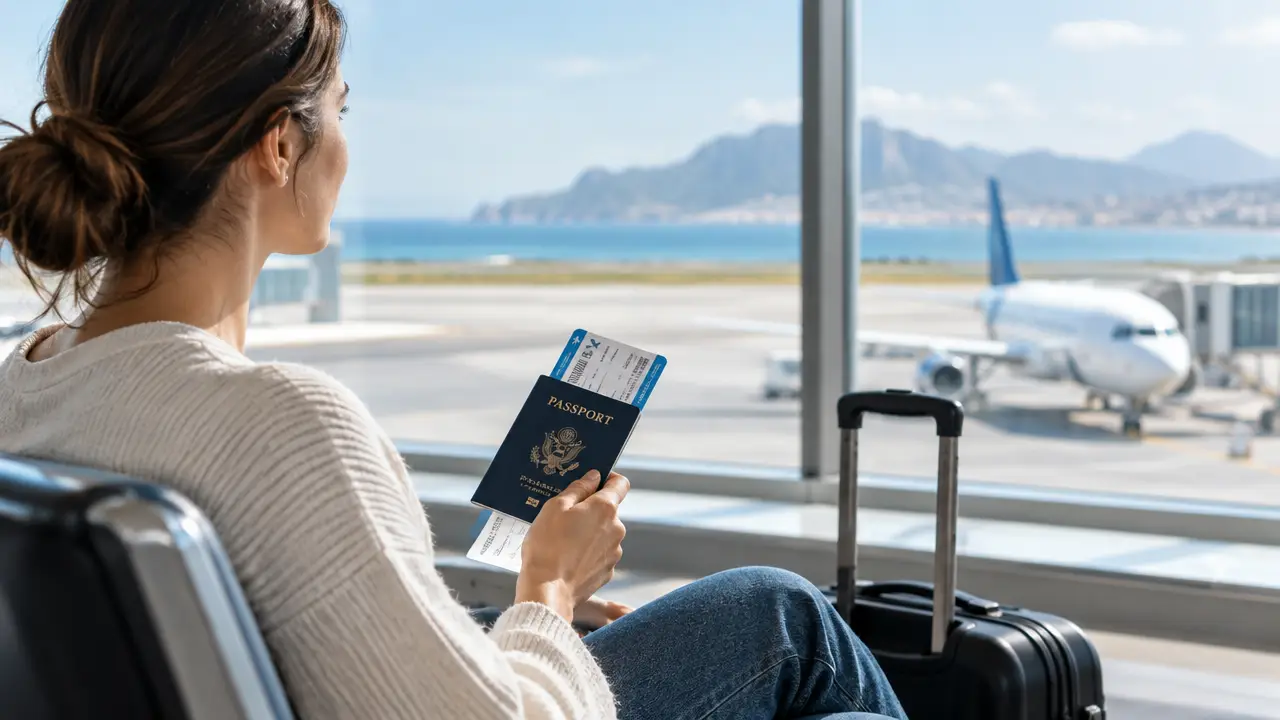
For many U.S. patients, the decision to seek treatment at Oceánica in Mazatlán is clinically clear — quality CARF-accredited care at a fraction of U.S. costs, in a Pacific coast setting with a fully English-speaking team. The question that follows is logistical: how do I actually get there, what documentation do I need, and what does the process look like from the moment I decide to the moment I walk in the door?
This guide provides the practical answer to each of those questions.
DIRECT FLIGHTS FROM MAJOR U.S. CITIES
Mazatlán is served by General Rafael Buelna International Airport (airport code: MZT), with direct flight options from multiple U.S. cities.
Current direct or near-direct flight options include:
- Los Angeles (LAX): Multiple airlines offer direct flights, typically 2-2.5 hours.
- Phoenix (PHX): Direct flights available, approximately 1.5-2 hours.
- Houston (IAH/HOU): Direct flights available, approximately 2.5-3 hours.
- Dallas (DFW/DAL): Direct or short-connection options, approximately 3-3.5 hours.
- Denver (DEN): Seasonal direct options and year-round connecting service, approximately 3-4 hours with connection.
- Seattle, Portland, Bay Area: Connecting service through LA, Phoenix, or Houston — total travel time typically 5-7 hours.
- Midwest and East Coast: Connecting service through hub airports — total travel time typically 6-10 hours.
Note: Flight availability, airlines, and schedules change. Always verify current options at booking. Oceánica’s admissions team can provide current flight guidance specific to the patient’s departure city.
Flight booking tips:
- Book early for better pricing, particularly for peak periods.
- Direct flights significantly reduce travel complexity — especially for patients arriving in a vulnerable state.
- Morning arrival allows for same-day admission and orientation.
- Inform the airline of any medical needs if relevant to the travel.
DOCUMENTATION REQUIRED
U.S. citizens traveling to Mexico for rehab admission need specific documentation. Preparing this in advance prevents delays.
Required documentation:
- Valid U.S. passport: Mexico requires a passport (not a passport card or driver’s license) for entry. The passport must be valid for the duration of the stay. If you don’t have a current passport, see the companion passport article for expedited options.
- FMM tourist card (Forma Migratoria Múltiple): U.S. citizens entering Mexico must complete a tourist card (FMM), which tracks entry and length of stay. This is now completed digitally before arrival (at https://www.inm.gob.mx/fmme/publico/en/solicitud.html) or can be completed on arrival at the airport. Oceánica’s admissions team provides guidance on this process.
Recommended additional documentation:
- List of current medications with dosages (essential for medical admission)
- Copies of relevant medical records or previous treatment records (helpful for comprehensive admission assessment)
- Insurance cards (for any emergency medical needs during the stay)
- Emergency contact information
What to leave at home:
Originals of important documents should be left with a trusted person at home; carry copies. This is standard international travel practice.
AIRPORT TRANSFER PROCESS
The airport transfer from MZT to Oceánica’s facility is a coordinated step that the Oceánica admissions team manages for patients.
How the transfer works:
- Pre-arrival: Coordinate with Oceánica’s admissions team before the travel date. Provide flight information — airline, flight number, and scheduled arrival time.
- At the airport: Proceed through Mexican immigration (present passport and FMM card), collect baggage, and proceed through customs.
- Oceánica’s transfer: Oceánica provides or arranges transportation from MZT airport to the facility. Specific arrangements are confirmed with the admissions team before departure.
This coordinated transfer means patients don’t need to navigate Mazatlán transportation independently on arrival — which is particularly important given the vulnerability of arriving for treatment.
Contact information for admission: (213) 527-3377 or oceanica-usa.com. The admissions team is the single point of contact for all pre-arrival logistics.
WHAT TO PACK
A separate packing guide article provides a comprehensive checklist, but key categories include:
Climate-appropriate clothing:
Mazatlán’s subtropical climate is warm year-round. Light, breathable clothing is appropriate throughout. Layers for evening or air-conditioned spaces. Comfortable workout clothing for gym and outdoor activities. Swimwear for pool use.
Medications and medical documentation:
Bring all current prescription medications in original labeled containers. Bring sufficient supply for the treatment period plus a week’s buffer. Documentation of all prescriptions (prescription labels or written prescriptions from the prescribing physician).
Personal essentials:
Toiletries, books, journal, comfortable personal items. Keep valuable electronics minimal.
What not to bring:
Alcohol or substances. Items prohibited by the program (the admissions team provides a specific list). Large amounts of cash or valuables.
FIRST-DAY LOGISTICS
Understanding what happens on arrival day helps patients prepare emotionally and practically.
- Arrival and transfer: Arrive at MZT, complete immigration formalities, meet Oceánica’s driver, travel to facility.
- Medical intake: On arrival at Oceánica, the medical team conducts an initial health assessment — vitals, review of medications, initial clinical evaluation. This is thorough and takes time.
- Psychiatric assessment: Early in the admission process, the psychiatric team conducts an initial assessment that informs the treatment plan.
- Orientation: Introduction to the facility, the schedule, the staff, and the other patients in treatment.
- Settling in: Unpacking, getting oriented to the living space, beginning to understand the daily rhythm.
The first day is typically intensive and tiring — managing the transition from travel to treatment. The clinical team at Oceánica manages this transition with experience, and patients are not expected to “perform” recovery from the first hour. The program is structured to provide a supported landing.
FREQUENTLY ASKED QUESTIONS
What documents do I need to travel to Mexico for rehab?
A valid U.S. passport (required), a completed FMM tourist card (completed online before departure or at the airport), list of current medications with dosages, and relevant medical records. Oceánica’s admissions team provides detailed pre-travel guidance.
Does Oceánica provide airport transfer?
Yes. Oceánica provides or arranges transportation from Mazatlán’s MZT airport to the facility. Coordinate flight information with the admissions team before departure.
How far is the airport from Oceánica?
General Rafael Buelna International Airport (MZT) is approximately 15-25 minutes from Oceánica’s facility in Mazatlán by vehicle — a short, straightforward transfer.
What if I need help on the way there?
Contact Oceánica’s admissions team at (213) 527-3377 before departure. The team is available to assist with any pre-arrival questions, concerns, or logistics. Patients traveling in a vulnerable state may benefit from a trusted companion traveling with them to the airport.
Recommended Reading
- Medical Tourism for Rehab in Mexico
- What to Pack for Rehab in Mexico: Complete Checklist
- Do You Need a Passport for Rehab in Mexico?
- Services and Programs at Oceánica
EXTERNAL REFERENCE LINKS
- General Rafael Buelna International Airport (MZT)
- Mexico Tourist Card (FMM)
- U.S. State Department — Passport
- Oceánica Conecta
Oceánica is a CARF-accredited residential treatment center in Mazatlán, Mexico. For pre-travel logistics support, call (213) 527-3377 or visit oceanica-usa.com. This article is informational and not a substitute for direct pre-admission guidance from Oceánica’s admissions team.