Top Rehab Centers in Mexico: A 2026 Comparison
Mexico has become one of the most significant destinations for international addiction treatment. The combination of lower costs, high-quality clinical care, and therapeutic environments draws thousands of Americans, Canadians, and international patients every year. But as demand has grown, so has the number of facilities competing for that patient base — and not all of them are created equal.
Making an informed comparison requires more than browsing websites. It requires applying the same clinical criteria that healthcare professionals use when evaluating treatment quality. This guide breaks down the most important factors and positions Oceánica within the landscape of top rehab centers operating in Mexico in 2026.
HOW WE RANKED THE TOP CENTERS
The comparison framework used in this article draws from criteria established by addiction medicine professionals, including standards from the American Society of Addiction Medicine (ASAM) and the Commission on Accreditation of Rehabilitation Facilities (CARF):
Tier 1 criteria (non-negotiable):
- Independent accreditation status
- Licensed and credentialed clinical staff
- Medically supervised detox capability
- Evidence-based treatment modalities
Tier 2 criteria (differentiating factors):
- Therapist-to-patient ratio
- Individual therapy frequency
- Bilingual capacity for U.S. patients
- Program length flexibility
- Aftercare planning and continuity
Tier 3 criteria (quality of life factors):
- Physical environment and setting
- Amenities and structured activities
- Private room availability
- Family communication protocols
The best centers in Mexico score well across all three tiers. Many score adequately on Tier 3 while falling short on Tier 1 and 2 — making their marketing materials compelling but their clinical outcomes less so.
CLINICAL QUALITY METRICS: WHAT SEPARATES THE BEST FROM THE REST
Accreditation
CARF accreditation is the clearest dividing line in Mexico’s rehab landscape. Most facilities operating in Mexico do not hold CARF certification. Those that do have submitted to independent quality review, ongoing outcome tracking, and unannounced site inspections.
Oceánica holds CARF accreditation — verifiable at carf.org. This places it in a small group of internationally certified residential treatment programs in Mexico.
Staffing and Ratio
| Ratio | Individual sessions/week | Clinical capacity |
| 8:1 (Oceánica) | 2x/week | High individualization |
| 12:1 (common) | 1x/week | Moderate |
| 15:1+ (some facilities) | Every 10–14 days | Limited |
At 8:1, Oceánica provides twice the individual therapeutic contact that a facility at 16:1 can offer. Over a 28–45 day program, this difference compounds significantly.
Detox Integration
Top rehab centers in Mexico integrate medical detoxification within the residential program. Patients should not need to complete detox at a separate facility before beginning treatment. Oceánica provides medically supervised detox as part of the inpatient program, with physician oversight and pharmaceutical support as clinically indicated.
COST AND VALUE COMPARISON
| Facility Type | Location | 28-Day Cost (USD approx.) | CARF Accredited |
| Oceánica | Mazatlán, Mexico | ~$13,500 | Yes |
| Mid-tier luxury, Mexico | Various | $8,000–$15,000 | Usually no |
| Budget/non-accredited, Mexico | Various | $2,000–$7,000 | No |
| Comparable U.S. luxury | U.S. | $30,000–$80,000 | Varies |
| U.S. standard residential | U.S. | $15,000–$30,000 | Varies |
The critical insight: Oceánica’s price point positions it in the same range as mid-tier Mexican facilities, while its clinical quality — measured by accreditation, staffing ratio, and 30+ years of outcomes — reflects a top-tier standard.
AMENITIES AND SETTING
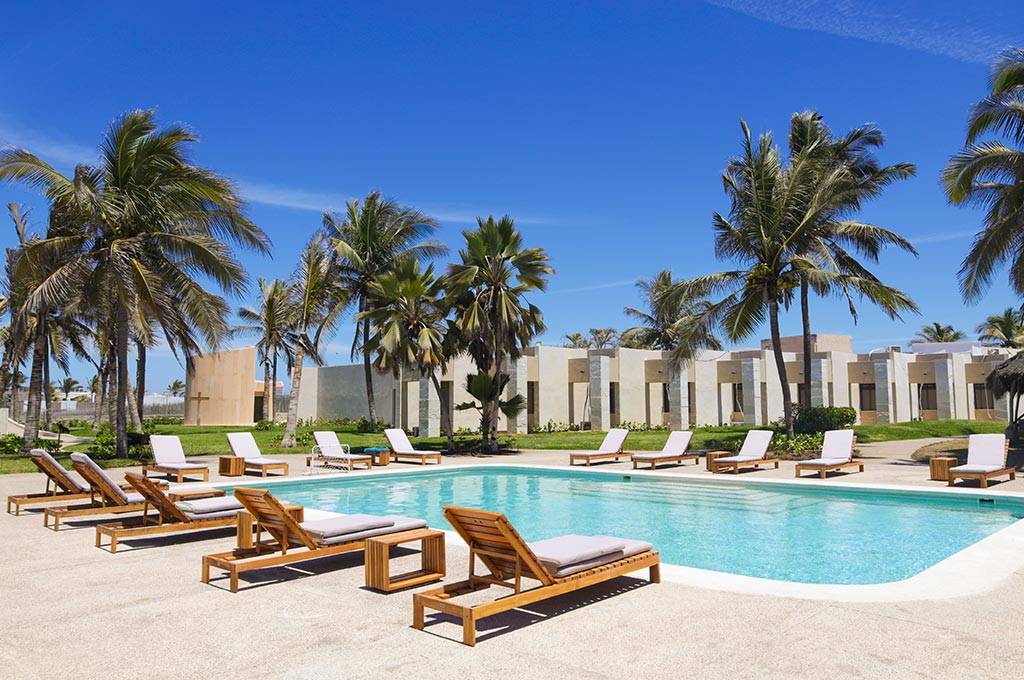
Oceánica’s Mazatlán campus sits on the Pacific coast. The facility includes:
- Gymnasium
- Swimming pool
- Volleyball court
- Soccer field
- Temazcal (traditional Mexican steam ceremony space)
It is worth noting what is NOT offered: Oceánica does not currently offer paddleboarding, art therapy, acupuncture, or ocean swimming as part of its program. Facilities that list these amenities should be verified — some market them as available when they are not consistently offered.
BILINGUAL CAPACITY
For American patients, the ability to receive clinical care in English is essential. Oceánica’s clinical team is fully English-speaking. Not all support staff are bilingual, but the clinical interaction — the part that determines treatment outcomes — is fully accessible to English-speaking patients.
When evaluating other centers, ask to speak with a therapist before enrolling to verify actual clinical English proficiency.
FINAL RECOMMENDATIONS
For the highest clinical standard at strong value: Oceánica in Mazatlán — CARF-accredited, 8:1 ratio, English-speaking clinical team, 30+ years of experience.
For patients prioritizing cost above all else: Be aware that budget-tier facilities in Mexico typically lack independent accreditation and have high therapist-to-patient ratios. The savings on paper may result in a less effective treatment experience.
For patients with very complex needs (dual diagnosis, severe trauma history, medical comorbidities): Oceánica’s 45-day program is designed for this population, with sufficient clinical depth and medical support.
FREQUENTLY ASKED QUESTIONS
Which rehab centers in Mexico are CARF-accredited?
CARF-accredited facilities in Mexico include Oceánica in Mazatlán. CARF accreditation can be verified at carf.org. Most rehab centers in Mexico are not CARF-accredited.
How much do top rehab centers in Mexico cost?
Among accredited luxury facilities, costs typically range from $10,000 to $25,000 USD for a 28–45 day program. Oceánica’s programs range from approximately $13,500 USD (28 days) to $19,100 USD (45 days).
What should I look for when comparing rehab centers in Mexico?
Key criteria: independent accreditation (CARF), therapist-to-patient ratio, English-speaking clinical staff, program length options, inclusion of detox services, and transparency about pricing and outcomes.
SUGGESTED INTERNAL LINKS
– Best Rehab in Mexico: How to Choose the Right Center
– Rehab in Mexico: World-Class Addiction Treatment at a Fraction of the Cost
– Luxury Rehab Mexico: Premium Addiction Treatment at Oceánica
– Services and Programs at Oceánica: https://oceanica-usa.com/services/
EXTERNAL REFERENCE LINKS
– CARF International — Accredited Provider Search: https://www.carf.org/providerSearch.aspx
– ASAM — Levels of Care in Addiction Treatment: https://www.asam.org/asam-criteria
– NIDA — Drug and Alcohol Treatment Overview: https://nida.nih.gov/publications/drugfacts/treatment-approaches-drug-addiction