
Affordable Rehab in Mexico: Quality Care Without U.S. Pricing
The idea that you have to choose between affordable and good is one of the most persistent — and damaging — myths in addiction treatment. It leads people to delay seeking help, settle for inadequate local options, or take on financially devastating debt for U.S.-based treatment. In Mexico, that trade-off does not exist in the same way — at least not at accredited facilities.
This article explains why rehab in Mexico is genuinely affordable, how quality is maintained despite lower price points, what is included for the cost, and what warning signs to watch for when evaluating budget-oriented options.
WHY MEXICO COSTS LESS
The cost of any healthcare service reflects the cost of delivering it. In the United States, healthcare costs are inflated by:
- High real estate costs for facility space
- High labor costs for licensed clinical staff
- Large administrative and billing infrastructure (to navigate insurance)
- Malpractice insurance premiums
- Regulatory compliance overhead
- Marketing costs in a competitive market
In Mexico, each of these cost drivers is lower. Real estate in Mazatlán is a fraction of equivalent property in California, Florida, or New York. Clinician compensation, while reflective of training and professional standing, is calibrated to the local economy. Administrative overhead is leaner because the model is primarily self-pay rather than insurance-dependent.
None of these cost differences affect what happens in the therapy room. A licensed clinician in Mazatlán with 10 years of addiction treatment experience is delivering the same evidence-based therapeutic modalities as their counterpart in Los Angeles.
COST WITHOUT QUALITY COMPROMISE
At Oceánica, the answer to “what am I actually getting?” is documented:
CARF-accredited clinical model. CARF accreditation is not awarded based on price — it is awarded based on clinical quality. Oceánica’s accreditation confirms that the clinical standards at the facility meet the same benchmarks as top U.S. centers.
8:1 therapist-to-patient ratio. One therapist serves a maximum of eight patients. This ratio — twice as intensive as many U.S. facilities — would be cost-prohibitive to maintain at U.S. labor rates. In Mexico, it is sustainable.
Two individual therapy sessions per week. Many affordable U.S. programs provide one session per week at their price point. At Oceánica’s pricing, patients receive twice the individual clinical contact.
Five group therapy sessions per week. The group therapy schedule is intensive and structured — not a single daily meeting but a robust five-day-per-week program.
Medically supervised detox included. For substance use programs, detox is medically managed within the program, not subcontracted to a separate facility at additional cost.
WHAT YOU GET FOR THE PRICE
Included | Details
Accommodation | Shared room (private upgrade available)
Meals | Three daily, nutritionally designed
Medical supervision | 24/7 clinical and nursing oversight
Individual therapy | 2 sessions/week, licensed bilingual therapist
Group therapy | 5 sessions/week, structured facilitation
Medical consultation | Physician access as needed
Psychiatric assessment | Initial evaluation; medication management if indicated
Detox management | Medically supervised for substance use programs
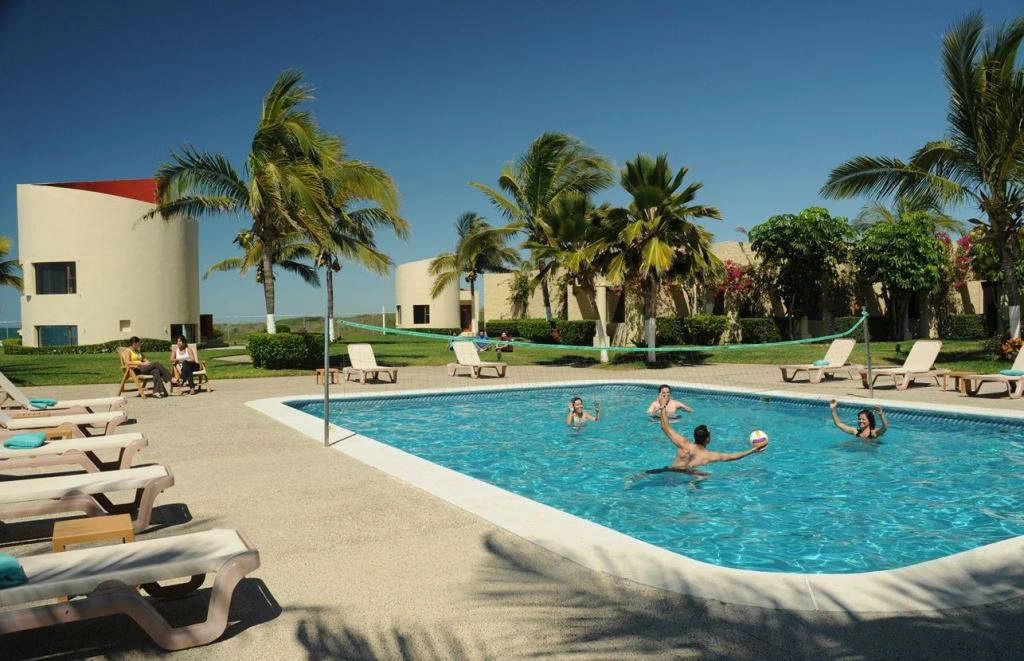
Facilities | Gym, pool, volleyball, soccer, temazcal
Aftercare planning | Discharge plan and follow-up coordination
At $13,500–$19,100 USD depending on program length, this represents a comprehensive clinical package.
HIDDEN COSTS TO WATCH FOR
Not all “affordable” rehab centers in Mexico are transparent about total costs. When evaluating any facility, ask specifically about:
Detox surcharges. Some facilities quote a low base rate but charge separately for medically supervised detox, which can add $2,000–$5,000 to the total.
Medication costs. Ask whether prescription medications used during treatment are included in the program fee or billed separately.
Family session fees. Some centers advertise family involvement but charge additionally for family sessions or video calls.
Transportation. Airport transfers from Mazatlán’s General Rafael Buelna International Airport to the facility are typically not included in program fees. Budget for this separately.
At Oceánica, the standard program fee is all-inclusive within the scope described above. There are no hidden clinical surcharges within the program.
FINANCING AND PAYMENT OPTIONS
USD wire transfer — direct payment in U.S. dollars at the current exchange rate.
Credit card payment — discuss accepted cards with the admissions team, as options may vary.
Payment planning discussions — the admissions team can discuss timing of payments relative to program enrollment.
Insurance documentation — while Oceánica does not directly bill U.S. insurers, the clinical team can provide documentation that some patients use in out-of-network reimbursement claims. Results vary by plan.
FREQUENTLY ASKED QUESTIONS
Why is rehab in Mexico more affordable than in the U.S.?
Rehab in Mexico costs less due to lower operating costs — real estate, labor, and administrative overhead — not because of reduced clinical quality. Accredited facilities like Oceánica deliver comparable care at a fraction of U.S. prices.
Does affordable rehab in Mexico mean lower quality?
Not at CARF-accredited facilities. Oceánica’s affordability is a product of Mexico’s lower cost economy, not reduced staffing or therapy frequency. The 8:1 ratio and twice-weekly individual therapy meet or exceed many U.S. programs.
What is the most affordable CARF-accredited rehab in Mexico?
Oceánica in Mazatlán is among the most accessible accredited options, with programs starting at approximately $13,500 USD for a 28-day stay.
SUGGESTED INTERNAL LINKS
- Rehab in Mexico: World-Class Addiction Treatment at a Fraction of the Cost
- How Much Does Rehab Cost in the US? A Complete 2025 Breakdown
- Best Rehab Centers in Mexico for Americans: A 2026 Expert Guide
- Contact Oceánica: https://oceanica-usa.com/contact-us/
EXTERNAL REFERENCE LINKS
- SAMHSA National Helpline — Free Treatment Referral: https://www.samhsa.gov/find-help/national-helpline
- CARF — Why Accreditation Matters: https://www.carf.org/home/
- NIDA — Drug Treatment Cost-Effectiveness Research: https://nida.nih.gov